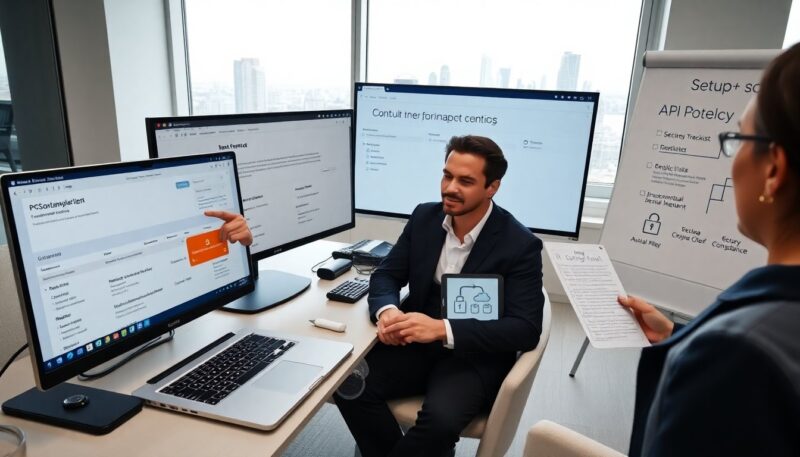
Healthcare software development company means a specialized technology partner that designs and delivers secure, compliant, and clinically accurate digital systems that support patient care, medical workflows, and health data management in environments where reliability directly affects human lives. Unlike conventional software domains, healthcare demands a level of rigor where technical decisions carry ethical and clinical weight.
The digital transformation of healthcare is no longer optional—it is structural. Hospitals are evolving into data-driven organizations, patients expect remote and personalized care, and clinicians rely increasingly on software to make informed decisions. From electronic health records (EHR) to AI-powered diagnostics and telemedicine platforms, software has become the connective tissue of modern healthcare ecosystems.
The Engineering Reality Behind Clinical Systems
At first glance, healthcare applications may resemble other enterprise platforms. But beneath the surface lies a fundamentally different level of complexity. Systems must handle diverse data types—structured clinical notes, imaging files, lab results, and real-time monitoring streams—while maintaining strict consistency and traceability.
A healthcare software development company operates under three constant pressures:
- Accuracy: Clinical decisions depend on data integrity. Even minor inconsistencies can lead to incorrect diagnoses or treatments.
- Availability: Systems must function continuously, often with near-zero tolerance for downtime.
- Compliance: Regulatory frameworks such as HIPAA and GDPR impose strict controls on how data is stored, processed, and shared.
These constraints shape every layer of system design, from database architecture to user interfaces.
Interoperability: The Core Challenge
One of the most persistent challenges in healthcare IT is fragmentation. Different providers, departments, and devices often use incompatible systems, creating silos that hinder the flow of information.
Interoperability is not just a technical requirement—it is essential for effective care coordination. Standards such as HL7 and FHIR aim to address this issue, but implementation remains complex. Data must be normalized, mapped, and validated across systems with varying structures and semantics.
A healthcare software development company must design solutions that bridge these gaps, enabling seamless communication without compromising data accuracy or security. This often involves building middleware layers, APIs, and integration platforms that can adapt to evolving standards.
Data as a Clinical Asset
Healthcare generates an immense volume of data, but its true value lies in how it is used. Advanced analytics and machine learning are transforming raw data into actionable insights, from predicting disease progression to optimizing hospital operations.
Clinical decision support systems (CDSS) exemplify this shift. By analyzing patient data in real time, these systems can provide recommendations, flag potential risks, and assist clinicians in making evidence-based decisions.
However, the use of AI in healthcare introduces new challenges. Models must be transparent, validated, and free from bias. Unlike other domains, where a “good enough” prediction may suffice, healthcare requires a higher standard of accountability.
Data governance becomes critical. Ensuring data quality, consistency, and lineage is not just a technical task—it is a prerequisite for trust.
Security and Privacy: Beyond Compliance
Healthcare data is among the most sensitive categories of personal information. Protecting it requires more than meeting regulatory requirements; it demands a proactive, security-first mindset.
A healthcare software development company must implement:
- End-to-end encryption to protect data in transit and at rest
- Granular access controls to ensure that only authorized users can access specific data
- Comprehensive audit trails to track every interaction with the system
But security is not solely a technical issue. Human factors—such as weak passwords or phishing attacks—remain significant risks. Effective solutions combine technology with training and organizational policies.
Designing for Clinical Workflows
User experience in healthcare is uniquely complex. Clinicians operate in high-pressure environments where time is limited and decisions are critical. Poorly designed interfaces can lead to inefficiencies, frustration, and even errors.
Effective design focuses on:
- Reducing cognitive load by presenting information clearly and contextually
- Streamlining workflows to minimize unnecessary steps
- Ensuring consistency across different parts of the system
For patients, usability takes on a different dimension. Applications must be accessible, intuitive, and inclusive, accommodating users with varying levels of digital literacy and physical ability.
Design, in this context, becomes a tool for improving both efficiency and safety.
The Role of Emerging Technologies
Innovation in healthcare software is accelerating. Artificial intelligence, the Internet of Medical Things (IoMT), and blockchain are reshaping how data is collected, analyzed, and shared.
Wearable devices, for example, enable continuous monitoring of vital signs, providing clinicians with real-time insights into patient health. AI algorithms can analyze imaging data with remarkable accuracy, assisting in early detection of diseases.
However, integrating these technologies into clinical practice requires careful validation. Regulatory approval, ethical considerations, and real-world testing are essential to ensure that innovation translates into meaningful outcomes.
A healthcare software development company must balance ambition with responsibility, adopting new technologies only when they deliver proven value.
Building Resilient Systems
Resilience is a defining characteristic of healthcare software. Systems must not only perform under normal conditions but also withstand unexpected events—whether technical failures, cyberattacks, or sudden surges in demand.
This requires:
- Redundant infrastructure to ensure continuity
- Robust monitoring and alerting systems to detect issues early
- Disaster recovery strategies to restore operations بسرعة
Resilience is not a single feature but a property of the entire system, achieved through careful design and continuous improvement.
Collaboration Across Domains
Healthcare software development is inherently interdisciplinary. Engineers must work closely with clinicians, administrators, and regulatory experts to create solutions that are both technically sound and clinically relevant.
This collaboration often involves iterative development, with frequent feedback loops and real-world testing. Prototypes are refined based on user input, ensuring that the final product aligns with actual needs rather than assumptions.
Such an approach not only improves usability but also fosters trust among stakeholders—a critical factor in healthcare adoption.
Conclusion
Healthcare software sits at the intersection of technology, medicine, and human experience. It demands precision, empathy, and a deep understanding of complex systems. As digital transformation continues to reshape the industry, the role of a healthcare software development company will only grow in importance.
Organizations that succeed in this space combine rigorous engineering with a genuine commitment to improving patient outcomes. They understand that every system they build has real-world implications, influencing how care is delivered and experienced. And in this evolving landscape, companies like Andersen healthcare software development company demonstrate how global expertise and thoughtful engineering can come together to create solutions that truly matter.