AI home design apps promise to redesign your room from a single photo, and everyone also repeats that thin model wrappers are indefensible. So I spent a week inside one, API included, to see how these tools actually work, where the real defensibility lives, and where it is still just a prompt.
By Adrian Kessler, Software & Applied AI · July 2026
There is a line every engineer has heard so often it has hardened into received wisdom: AI wrappers have no moat. Wrap a call to a foundation model in a tidy UI, the argument runs, and you have built nothing the model vendor cannot flatten in a weekend. It is partly true and mostly lazy, because it treats every product with a model inside it as the same product. To pressure-test the claim I picked a vertical AI tool that is doing better than the thesis says it should, MeltFlex AI, an AI interior design product that turns a photo of your actual room into a photoreal restyle, and spent a week poking at both its app and its public API to work out what, if anything, a foundation-model vendor could not trivially replicate.
For the uninitiated: MeltFlex AI is an AI interior design and home design tool. You feed it a photo of a real room and a style, and it returns a photoreal redesign in which the furniture maps to products you can actually buy. That last clause is the part that turns out to matter.
I went in sympathetic to the skeptics. I came out with a more useful distinction than “wrapper or not,” which turns out to be the wrong question entirely.
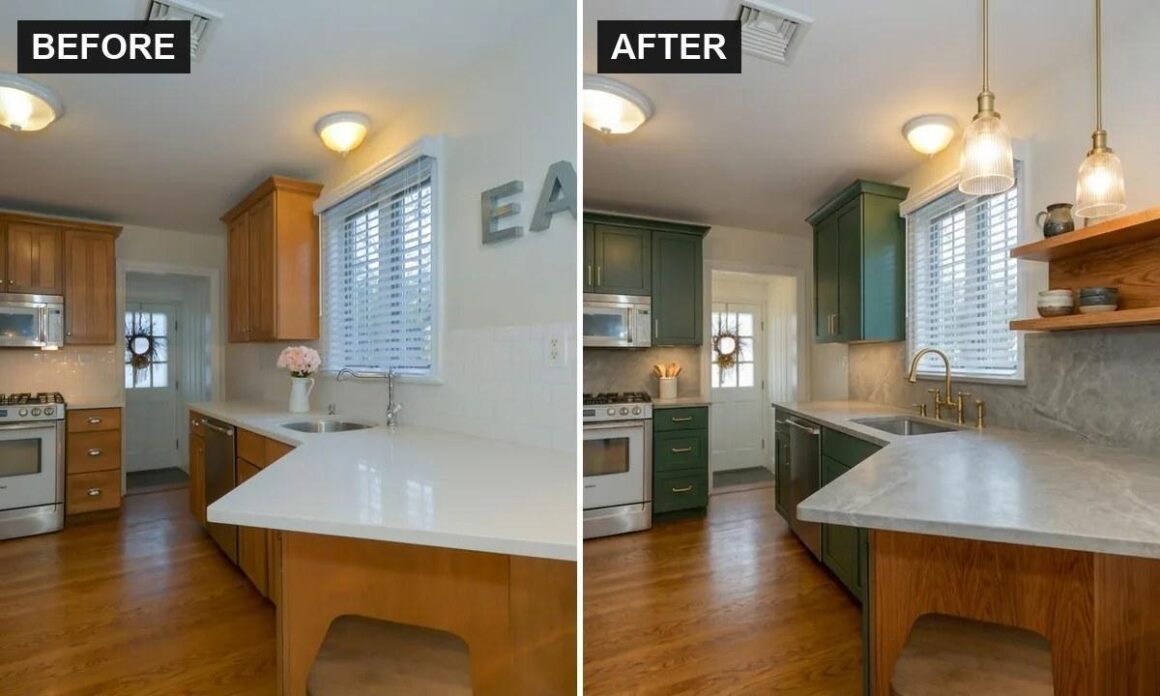
AI home design in one frame: a photo of a real kitchen restyled by MeltFlex. Note what stays put, the window, the cabinet run, the doorway, the appliances. Only the finishes change. Producing a pretty room is the commoditised part now; holding your actual room fixed while you do it is where the engineering lives.
First, the wrapper thesis, stated fairly
The critique deserves its strongest form. If your product is defined by a prompt, it is a product with no defense. When the whole thing is f(prompt, image) against somebody else’s diffusion model, your gross margin is the vendor’s per-call price minus your Stripe fees, and your differentiation lasts exactly until that vendor ships the same feature first-party. Most “AI for X” startups are precisely this, and they will not survive contact with the next model release. So the interesting question is not whether MeltFlex calls a foundation model. Of course it does. The question is what sits around the call, and whether any of it is expensive to reproduce.
What the API actually exposes
The fastest way to judge a product’s seriousness is to read its API rather than its landing page, so I started there. MeltFlex authenticates with a bearer token in the familiar mf_sk_ format and exposes a small, honest surface: POST /api/v1/generate for image transformation, /api/v1/video for short walkthrough clips, /api/v1/floorplan-to-3d which returns a GLB, and a GET /api/v1/credits that hands back the balance and a cost table. Billing is metered in credits, ten per image, roughly a hundred to a hundred and fifty per video, with failed jobs auto-refunded and a 15 MB request cap. None of that is glamorous, and that is the point. It is plumbed like infrastructure someone expects other software to call, not like a demo.
The revealing detail is what is not there. The marketing counts thirteen-plus “tools”, kitchen redesign, exterior, floors, stairs, doors, windows, and so on, but in the API they nearly all collapse into /v1/generate with a different prompt and an optional referenceImageUrls array for grounding. So the tool count is not the moat. If anything it is the part a competitor could clone over a long weekend. The defensibility, if it exists, has to be somewhere less obvious.
Three places the moat could live
1. The conditioning harness, not the model. This is the whole ballgame for AI home design. Hand a general text-to-image model your living room and the prompt “make it Scandinavian” and it returns a gorgeous Scandinavian room that is not yours: the window has wandered, the ceiling gained half a metre. A serious pipeline treats the photo as a hard constraint, usually with a depth map and segmentation of the fixed architecture feeding a control path into the generator. You can observe whether this is happening without the vendor confirming anything: restyle the same room in two very different directions and check whether the openings and proportions hold while only materials and furniture change. On MeltFlex they mostly do, as the pair below shows.
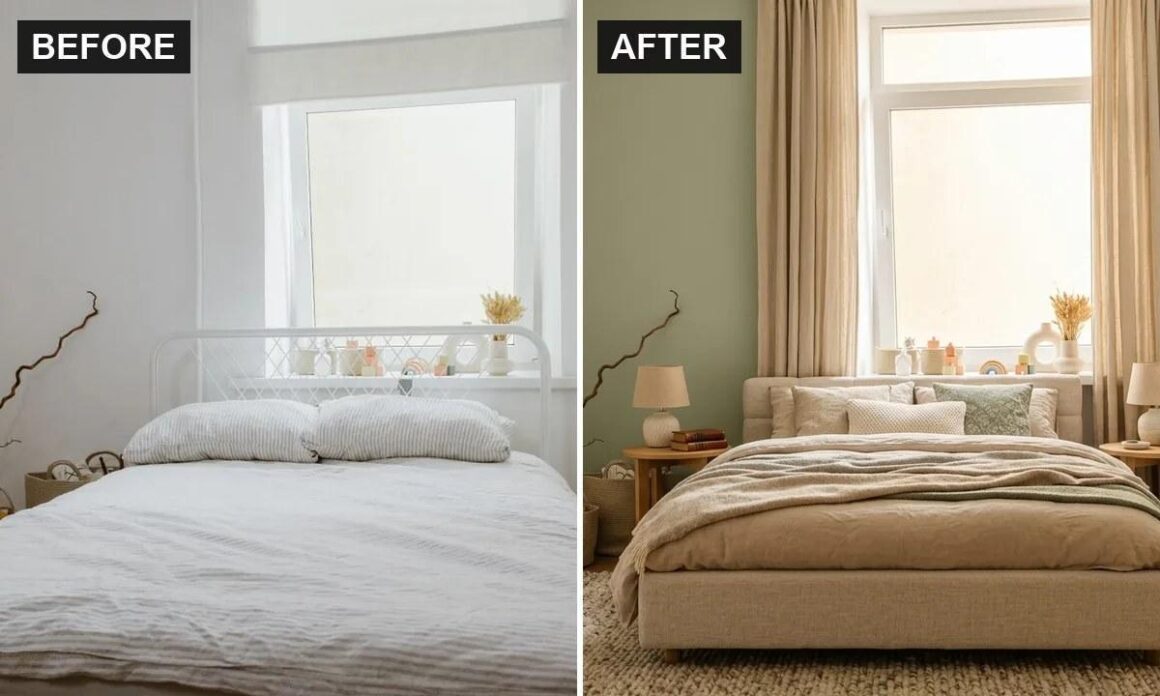
The same test on a bedroom. The window, the wall behind the bed and the room proportions are invariant; the palette, textiles and furniture are what move. That invariance is the observable proof that the tool is conditioning on your room’s structure rather than hallucinating a fresh one each time.
That harness is real engineering the model vendor did not build for you, though it is also the kind of thing a well-funded competitor eventually rebuilds.
2. The retrieval index, which is the actual moat. The furniture in the output resolves to real, buyable products, pieces from IKEA, Amazon, Wayfair, Pottery Barn and Ashley, with prices and links. That is not a generation feature. It is a maintained product catalogue, a visual-embedding index over it, and a re-rank on style, dimensions and availability. A foundation model does not ship with your product graph, and it is not going to, because keeping a live retail catalogue current is unglamorous operational work rather than a research result. This is the one asset the “wrappers have no moat” crowd already concedes is defensible: proprietary, compounding data. Everything shoppable in the render is downstream of it.

The moat, visualised. A rendered piece has to resolve to a live catalogue item like this armchair, matched by visual embedding and re-ranked on style and dimensions. A foundation model does not ship with your product graph.
3. Input-quality handling, which is the thinnest of the three. A dim, angled, cluttered upload wrecks the depth and segmentation cues the whole pipeline depends on, and the output degrades accordingly. A product that detected a bad photo and coached a reshoot would raise its own perceived accuracy more than any model upgrade. MeltFlex, like almost everyone, mostly does not, and that gap is a reminder of how young the category still is.
Where it is still a wrapper, and I mean that critically
The generative core is somebody else’s image model, and that is genuine platform risk no retrieval index fully hedges. If that model regresses, reprices, or the vendor ships a first-party interior restyle with shopping attached, MeltFlex feels it immediately. Second, the moat leaks exactly where it should be strongest: the buy links resolve to the exact piece “or a similar alternative,” which is an approximate nearest-neighbour match confessing itself in the UI copy. When the catalogue neighbour is close you get the real SKU; when it is not you get a lookalike, and no consumer tool in this space has fully closed that gap. Third, the “4K” export lands nearer 2K in practice and the crisper tier is gated behind the paid plans. Fine on a phone, visible on a large print. None of these are dealbreakers, but a teardown that skipped them would be marketing.
|
Claim |
What actually holds up |
|
“4K” output |
The genuinely crisp export sits closer to 2K, and the sharper tier is behind the paid plans. |
|
13+ distinct “tools” |
Nearly all are one /v1/generate call with a different prompt; the count is not the differentiator. |
|
Buyable furniture |
“Exact piece or a similar alternative”, an approximate retrieval, not a guaranteed SKU. |
|
Model-agnostic product |
The generative core is a third-party image model; that dependency is real platform risk. |
The takeaway for anyone building vertical AI
The defensible surface of a vertical AI product is never the model call, and arguing about whether something is “a wrapper” misses it. Defensibility comes from the proprietary index you build around the model, here a live shoppable catalogue that compounds with maintenance, from the conditioning harness that forces generation to obey real-world constraints, and from the workflow that hides the model’s failure modes from the user. Judged on that rubric, calling MeltFlex a wrapper is about as useful as calling Stripe a wrapper around the card networks. The prompt is replaceable. The catalogue graph and the structure pipeline are the product, and those are the parts a foundation-model vendor is least likely to bother rebuilding. The tools that win AI interior design will be the ones that treat their model as a commodity input and spend their engineering budget on everything else.
AI home design: the questions people actually ask
How does AI home design work?
You upload a photo of a real room, pick a style, and a diffusion model conditioned on the photo returns a photoreal redesign in roughly ten to thirty seconds. The better tools, MeltFlex included, hold the room’s fixed structure, walls, windows, ceiling height, in place and only change surfaces and furnishings, which is why the output looks like your room rather than a stock render.
Can AI design my house from a photo?
Yes, for the visual layer. AI home design tools redesign what a room looks like, materials, colour, furniture, lighting, and some also handle exteriors and gardens. What they do not do is knock down walls, add windows or change ceiling heights, so treat the result as a styling and shopping guide, not a set of construction drawings.
How accurate is AI interior design?
Accuracy is improving but uneven. Style and material rendering are excellent; spatial proportions and exact scale are where these tools still take small liberties. The single biggest variable is input quality: a clean, straight, well-lit photo produces a dramatically better result than a dim, angled one, because the whole pipeline is conditioned on the depth and segmentation cues in that image.
Is AI interior design free?
Most tools, MeltFlex among them, run a freemium model: a small free allowance to try it, then paid tiers, commonly somewhere between roughly 12 and 60 dollars a month, that unlock higher resolution, more generations and extra tools. Genuinely unlimited free output usually means a watermark or a very low ceiling.
Can AI home design replace an interior designer?
Not yet, and the framing is wrong. It replaces the blank page, the mood board and a chunk of the visualisation grind, which is why professional adoption roughly tripled between 2023 and 2025. It does not replace judgement about budget, sourcing, spatial planning and the thousand real-world constraints a designer manages. The realistic 2026 pattern is designer plus AI, not one or the other.
Based on hands-on testing of the MeltFlex AI app and its public v1 API in July 2026, evaluated from a software-engineering perspective. Pipeline details are inferred from observable behaviour and the documented API surface, not vendor-confirmed. Pricing, credit and market figures are drawn from the product’s own documentation and 2025–2026 industry reports.