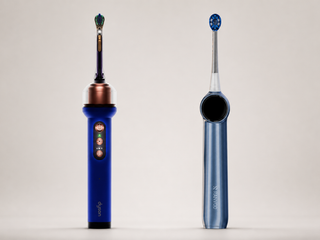
The arrival of the $499.99 Dyson CameraJet has pushed electric toothbrushes into luxury-tech territory. Its camera, targeted mouth-rinse jet and app make it easy to understand where the money goes. But a purchase decision should consider more than the number printed beside the Buy button.
The real cost of an oral-care device includes replacement heads, required consumables, charging, maintenance time and the chance that an elaborate feature will stop being used. Compared on those terms, RANVOO AirJet X5 offers a much stronger value proposition.
Start with what each product is actually selling
CameraJet is a connected oral-care system. A macro camera looks for spaces between teeth. When it detects one, a pump sends a short burst of mouth rinse from a tank in the handle. The MyDyson app can display a live view and brushing-coverage guidance.
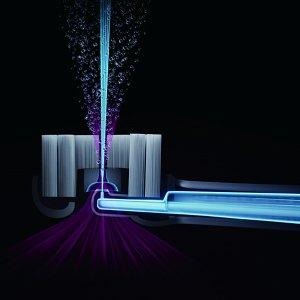
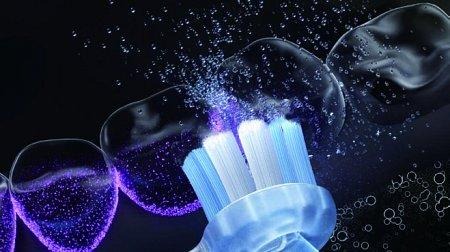
AirJet X5 does not try to recreate that experience at a lower price. It uses a different method. Airflow generates microbubbles from the fluid and toothpaste around the brush head, and the brush-head design guides that flow along teeth, toward gaps and around the gumline. It has no camera and no separate jet tank.
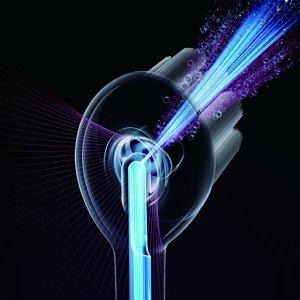
This distinction explains much of the cost difference. CameraJet buyers pay for imaging, software, a liquid-delivery path, a refill dock and an app ecosystem. AirJet buyers pay for a simpler mechanism designed to add hard-to-reach cleaning to an ordinary brushing routine.
An in-depth CameraJet vs AirJet cost and feature comparison lists the published specifications and prices while making clear that promotions can change. It also reveals why ownership cost deserves as much attention as launch price.
The first-year hardware bill
CameraJet launched at $499.99 in the United States. AirJet X5 was listed at a $127.99 sale price when checked on September 2, 2026. That is a difference of $372 before purchasing a single replacement part or consumable.
The current price on any given day may be different, and a sale price should never be represented as permanent. Nevertheless, the scale of the gap is meaningful. A household could replace an AirJet X5, buy several years of heads and still spend less than CameraJet’s original entry price.
Brush-head pricing continues the pattern. Dyson listed two replacement heads at $29.99, or about $15 per head. RANVOO listed three at $19.99, or roughly $6.66 each. Replacement schedules depend on wear and user behavior, so a universal annual total would be artificial. On a per-head basis, however, AirJet’s recurring hardware cost was less than half.
Consumables are part of the mechanism
Toothpaste is required for either normal brushing routine, but CameraJet adds mouth rinse as the working liquid for its jet. Dyson recommends a compatible clear, low-foaming rinse and a gel-type, non-foaming toothpaste to help the camera maintain visibility.
Consumers may already buy mouth rinse, so it would be unfair to count every bottle as a completely new expense. The key point is that CameraJet’s jet functionality depends on that supply. If the tank is not filled with suitable liquid, the signature targeted-cleaning feature is not operating as designed.
AirJet X5 does not require AirJet-branded mouth rinse or toothpaste. The system creates its microbubble flow from what is already around the brush head. That makes the feature less dependent on a shopping list and more likely to remain available during travel or a rushed morning.
Maintenance has a time cost
CameraJet’s fluid path needs care. Users fill the dock, refill the handle, rinse the brush head and tank and run the system until remaining liquid is cleared. This is sensible maintenance for a device that stores and pumps mouth rinse.
AirJet X5 requires the more familiar action of rinsing the brush head. There is no dedicated jet reservoir to fill or flush.
Imagine that the extra CameraJet routine takes only a minute per day. Over one year, that becomes more than six hours. The exact number will vary, but the principle is universal: recurring friction is a real ownership cost even when it never appears on a receipt.
It can also become a performance cost. A sophisticated device offers little value if the owner eventually switches to brush-only mode because the liquid system feels inconvenient. AirJet’s advantage is that its create-and-guide action is built into the basic brushing workflow, making consistent use easier.
Charging and travel create hidden friction
CameraJet is listed at 230 g and up to 10 days of battery life under Dyson’s conditions. AirJet X5 weighs 153 g with the head, while RANVOO estimates around 26 to 39 days depending on mode under a different use pattern. The claims are not directly comparable, but a lighter handle, no rinse tank and fewer expected charging interruptions make AirJet easier to travel with.
Lower cost does not mean untested cleaning
Value depends on performance, not just savings. AirJet’s published evidence covers multiple difficult-to-clean areas.
In one 20-person assessment after a single use, dentist-evaluated Plaque Index decreased by 99.08% across the whole mouth, 99.30% on a back tooth and 98.81% in the back-tooth groove. A separate 20-person imaging assessment reported relative decreases of 99.97% in interdental plaque-area proportion and 99.50% around the gingival sulcus.
Those results are not a direct comparison with CameraJet, and consumers should reject any claim that divides one company’s percentage by the other’s to manufacture a superiority ratio. They do demonstrate that AirJet’s lower price is not based on offering only a basic surface brush. The airflow, microbubble and guided-flow approach has measurements tied to the areas it is designed to reach.
What is the smarter purchase?
CameraJet may be worth its premium to an enthusiast who specifically wants live intraoral video, app-based coverage and automated targeting. Those are genuine differentiators, not decorative extras.
For most people, AirJet X5 provides the benefits that matter more often: assisted cleaning around difficult areas, a familiar routine, less maintenance, a lighter handle and fewer consumable dependencies. It offers those benefits at a fraction of CameraJet’s launch price and with lower replacement-head costs.
The most expensive device is not necessarily the one with the highest sticker price. It is the one whose signature feature becomes too complicated to use consistently. AirJet’s simpler ownership model makes it the better financial decision—and, for everyday brushing, probably the more sustainable habit.