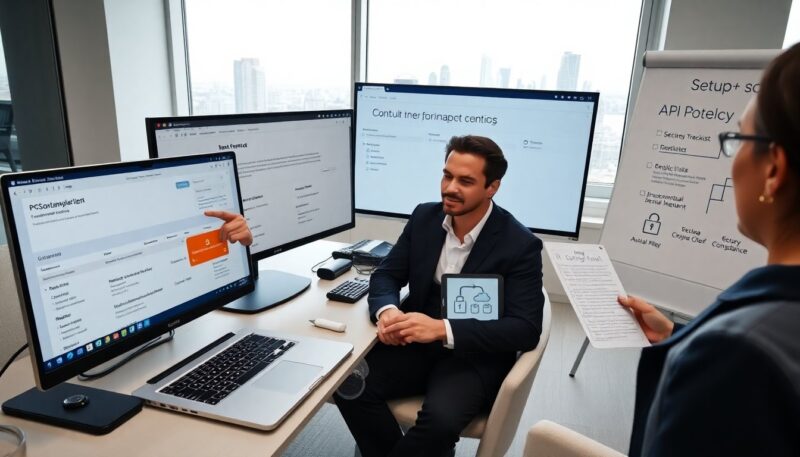
ProgramGeeks backbone modern business appears when teams choose developer-first platforms. The platform lets engineers own deployment, testing, and scaling. Teams reduce handoffs and move faster. Leaders see lower downtime and clearer metrics. Investors value predictable delivery and cost control.
Key Takeaways
- The ProgramGeeks backbone modern business empowers engineering teams with developer-first tools to reduce handoffs and accelerate deployment, boosting product delivery speed.
- By integrating APIs, CLI tools, and service templates, teams shorten cycle and repair times while enhancing policy enforcement and security within pipelines.
- This platform reduces cloud costs through automated scaling, cost-aware resource provisioning, and clear financial reporting, aiding better budget control.
- Centralized features like unified CI/CD pipelines, secrets management, observability dashboards, and policy-as-code simplify operations and compliance for modern businesses.
- Adopting the ProgramGeeks backbone leads to measurable ROI including fewer rollback events, lower cloud waste, and improved release frequency tied to business growth.
- Planned phased rollouts, comprehensive training, and continuous improvement ensure smooth implementation and alignment with evolving developer and product needs.
Why Developer-Centric Infrastructure Is The New Competitive Advantage
Teams adopt the ProgramGeeks backbone modern business to speed product delivery. Engineering teams gain APIs, CLI tools, and service templates. Developers deploy features without waiting on operations. Product teams release updates more often and collect user feedback faster.
Managers measure cycle time and mean time to repair. The ProgramGeeks backbone modern business reduces both metrics. Operations staff shift from firefighting to guardrail work. The platform enforces policy and security rules at the pipeline level. That enforcement cuts error rates and audit time.
Companies that use developer-centric infrastructure lower cloud spend. Engineers provision resources with cost-aware defaults. The ProgramGeeks backbone modern business includes automated scaling and shutdown schedules. Finance teams get clearer cost allocation and monthly variance reports.
Competitors who keep rigid handoffs lose velocity. Teams that adopt a developer-first model win shorter release windows. Investors reward faster time-to-market with higher valuations. The ProgramGeeks backbone modern business directly links engineering speed to business results.
Core Features Of The ProgramGeeks Backbone For Modern Business
The platform offers consistent service templates. Teams reuse these templates for microservices, jobs, and front-end apps. Templates include logging, metrics, and health checks by default. Engineers avoid repetitive setup and focus on features.
ProgramGeeks adds a centralized secrets store. Developers fetch secrets through short-lived tokens. Security teams audit access with a single pane. The approach reduces leaked credentials and simplifies rotation.
The backbone provides a unified CI/CD pipeline. Build, test, and deploy run in one flow. The pipeline supports feature flags and canary deployments. Product managers roll out features to segments and measure impact in production.
Observability features ship with every service. Logs, traces, and metrics arrive in a single dashboard. On-call teams detect regressions faster. The ProgramGeeks backbone modern business shortens incident response paths.
The platform includes role-based access and policy-as-code. Legal and compliance teams codify retention and access rules. Auditors retrieve evidence with simple queries. The ProgramGeeks backbone modern business helps companies meet regulatory checks without heavy manual work.
Integrations link the platform to common tools. The system connects to issue trackers, chat, and cloud providers. Teams automate ticket creation for failed builds. The integration layer reduces context switching for developers.
The backbone offers cost controls and forecasting. Finance sees projection charts and spend alerts. Product owners set budgets per team. The ProgramGeeks backbone modern business keeps cloud surprises low.
Implementing ProgramGeeks: Roadmap, Risks, And Measurable ROI
Leaders plan a phased rollout for the ProgramGeeks backbone modern business. They start with a pilot team that owns a single service. The pilot team migrates tests and deployment into the platform. Teams capture baseline metrics for comparison.
The rollout expands by grouping teams with similar stacks. Platform engineers create service templates for each group. Documentation and office hours support the transition. Managers track adoption rates and pipeline success as leading indicators.
Common risks include cultural resistance and legacy dependencies. Architect teams map dependencies and isolate high-risk services. They provide adapters or shims for older systems. Training reduces resistance by showing day-to-day benefits.
Security teams must validate the secrets and access model. They run red-team exercises and automated scans. The ProgramGeeks backbone modern business supports fine-grained controls that security can test incrementally.
Measurement focuses on release frequency, deployment failure rate, and recovery time. Teams also track development lead time and cost per feature. After three to six months, the pilot often shows measurable gains. The ProgramGeeks backbone modern business typically yields faster releases and fewer incidents.
A concrete ROI example: a mid-size team cuts rollback events by half and reduces cloud waste by 18% within four months. Finance reports lower unplanned spend and cleaner cost centers. Executives see clearer product velocity metrics tied to revenue milestones.
Case studies from adjacent industries show similar gains. Major media reworks of apps and sites offer evidence that redesign and platform work change user engagement. For example, a recent media platform overhaul aimed to improve fan experience and digital delivery speed, and it reported faster content updates and improved session metrics after launch, which aligns with outcomes expected from the ProgramGeeks backbone modern business. The ProgramGeeks backbone modern business hence fits companies that need predictable releases and tighter cost control.
Teams that carry out this backbone plan for continuous improvement. They set quarterly platform goals and measure against KPIs. The platform evolves with feedback from developers and from product analytics.