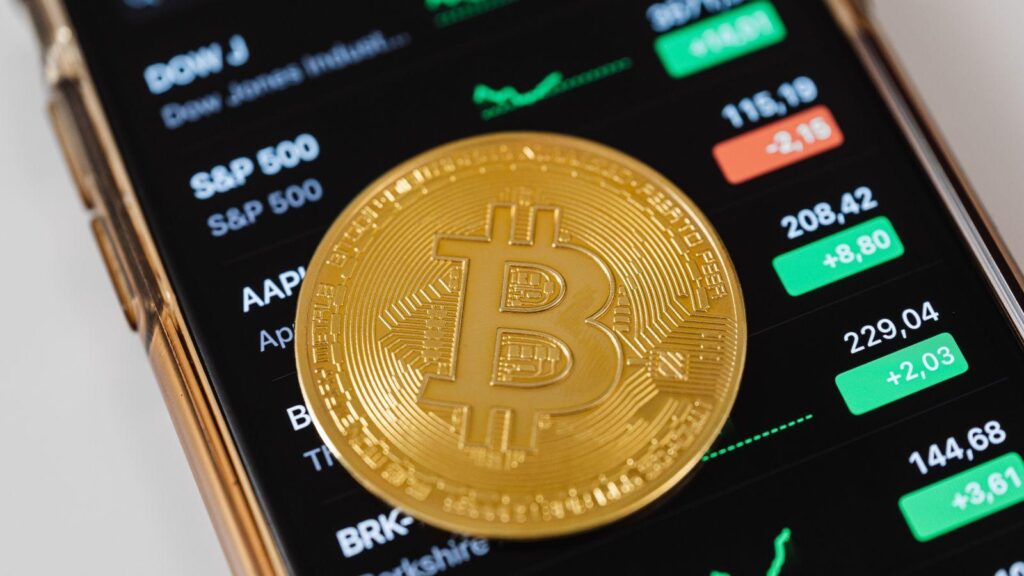
It hit $126,000.
In late 2025, Bitcoin reached a price that most analysts had considered optimistic just a few years earlier. Institutional ETFs were absorbing billions in weekly inflows. The strategy was buying relentlessly. Governments were debating strategic Bitcoin reserves. The narrative had shifted from “if Bitcoin” to “how much Bitcoin” in boardrooms that once would have laughed at the question.
Then it fell. By June 2026, Bitcoin was trading near $70,000, down roughly 43% from its peak. The drawdown was not unusual by Bitcoin’s historical standards. It has fallen more than 70% from peaks twice before in its history. But the speed and scale of the decline from a level that had felt like consolidation rattled participants who had expected the institutional era to dampen volatility.
Now, with 2027 approaching, the question the market is asking is whether the next chapter looks more like recovery or continuation of decline. Analysts disagree sharply. And that disagreement itself is worth examining.
The Bull Case: Halving Cycles and Institutional Flow
Bitcoin’s most reliable historical framework for price behavior is the halving cycle. The April 2024 halving reduced daily issuance from 900 new Bitcoin to 450. Previous halvings in 2012, 2016, and 2020 each preceded significant bull markets, though the lag between the halving and the peak has varied.
Wall Street broker Bernstein maintained a $200,000 Bitcoin price target for the 2027 cycle peak as of late 2025, framing 2026 as the beginning of a tokenization supercycle. Their thesis rests on the combination of post-halving supply tightening, continued institutional ETF accumulation, and regulatory clarity from MiCA in Europe and evolving frameworks in the United States.
The institutional infrastructure now supporting Bitcoin is categorically different from previous cycles. BlackRock’s Bitcoin ETF reached $70 billion in assets within 341 days of launch. U.S. spot Bitcoin ETFs collectively hold a significant share of Bitcoin’s total circulating supply. When these products see inflows, they buy Bitcoin directly. When cycles turn, the question is whether that structural demand holds or reverses.
The Bear Case: Leverage, Pressure, and Macro Uncertainty
The decline from $126,000 to $70,000 was not simply profit-taking from long-term holders. It involved unwinding of leveraged positions across the market, outflows from Bitcoin ETFs, and the broader pressure of a risk-off macro environment shaped by geopolitical tension and questions about the sustainability of Bitcoin treasury company models.
Several companies that had adopted Strategy-style Bitcoin treasury strategies entered those positions near the top of the market. With Bitcoin now significantly below those entry levels, the financial mechanics of holding leveraged Bitcoin positions become increasingly complicated. Forced selling from distressed treasury companies could create additional downward pressure.
The relationship between Bitcoin and global risk appetite has also proven more persistent than Bitcoin bulls often acknowledge. When equity markets face stress, Bitcoin has historically shown correlation with other risk assets, at least in the short term. A difficult macro environment in 2026-2027 could challenge Bitcoin’s ability to recover quickly regardless of supply dynamics.
What the Numbers Actually Show
Making precise Bitcoin price predictions is a speculative exercise dressed in quantitative clothing. The range of serious analyst forecasts for 2027 spans from below current levels to multiples of the current price. That range reflects genuine uncertainty, not analytical disagreement at the margins.
What we can say with confidence:
Bitcoin’s supply is programmatically limited. The 2028 halving will reduce daily issuance again. Approximately 19.7 million of the eventual 21 million Bitcoin have already been mined. Supply is tightening by design, on a known schedule.
Institutional adoption has reached a scale that did not exist in previous cycles. The infrastructure around Bitcoin is more mature, more regulated, and more accessible to mainstream investors than at any previous point in its history.
Volatility has not been eliminated. Bitcoin fell 43% from its all-time high. It has done this before and recovered. Whether it does so again, and on what timeline, depends on factors ranging from macroeconomic conditions to regulatory developments to the behavior of large institutional holders.
Blockforia on Long-Term Positioning vs Short-Term Timing
The question “where is Bitcoin going in 2027?” is ultimately the wrong question for most investors. The more useful question is whether Bitcoin deserves a position in a portfolio given its properties, risks, and the investor’s own timeline and risk tolerance.
Blockforia, owned and operated by BFinance EOOD in Sofia, Bulgaria, serves European users who have made that assessment and want regulated access to buy Bitcoin without leverage, without exotic derivatives, and without exposure to the platform risk that has destroyed value for investors at poorly managed exchanges. The platform holds Bulgarian Operating License BB-49 and was established by a team of Bitcoin technologists, lawyers and auditors with a focus on compliant, straightforward onboarding.
Bitcoin is a volatile asset and users should understand that they could lose a substantial portion of their investment. The post-ATH decline from $126,000 to $70,000 is a useful reminder that Bitcoin’s long-term trajectory and its short-term behavior are entirely different things. Anyone positioning for 2027 should be comfortable with the possibility that 2026 has further to run in either direction.
The Honest Answer
Nobody knows where Bitcoin will be in 2027. The people saying $200,000 may be right. The people saying $50,000 may be right. Anyone claiming certainty in either direction is selling something other than analysis.
What we do know is that Bitcoin has survived every previous drawdown, every regulatory scare, every exchange collapse, and every declaration of its death. It has done so by remaining exactly what it is: a fixed-supply, decentralized monetary network that no single party controls. Whether that’s worth $70,000 or $200,000 in 2027 is a question the market will answer, not analysts.