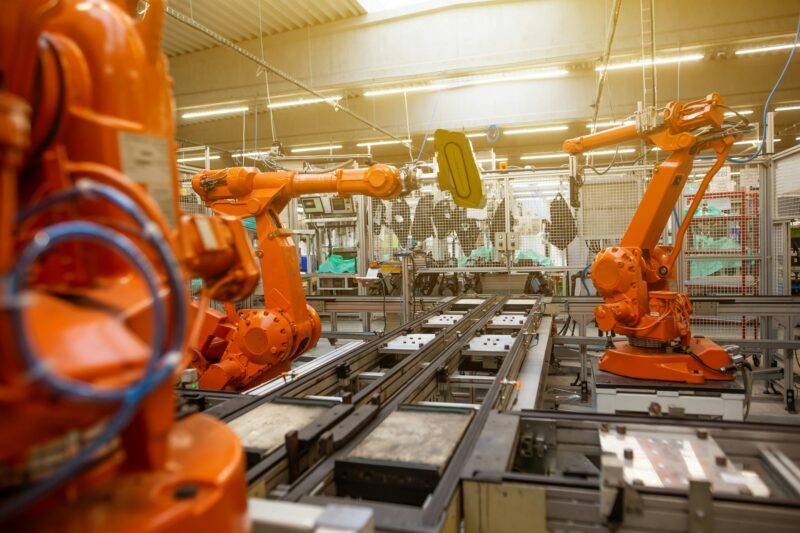
In the realm of 3D computer graphics, architectural visualization, and animation, the calculation of light, textures, and physics remains one of the most computationally expensive tasks in the pipeline. As software capabilities expand and the demand for photorealism increases, local hardware frequently becomes a severe bottleneck. To bypass these hardware limitations and maintain project timelines, technical artists and developers rely on distributed computing networks. This is where a render farm becomes a structural necessity rather than a luxury.
Understanding the Core of a Render Farm
At its fundamental level, a render farm is a high-performance computer cluster built specifically to render computer-generated imagery (CGI). Instead of a single workstation attempting to process a complex animation frame by frame, the workload is distributed across dozens, hundreds, or even thousands of individual rendering nodes.
Each node is essentially a dedicated computer, stripped of unnecessary background processes and optimized for either CPU or GPU rendering. When a project is uploaded to the farm, a central management system parses the scene data, allocates specific frames or render buckets to available nodes, and then compiles the finished images. This parallel processing architecture reduces rendering times from weeks or days down to mere hours.
The Shift from Local Rigs to Cloud Render Farm Infrastructure
Historically, large animation studios built and maintained their own on-premise render farms. However, for mid-sized studios, freelance technical artists, and independent developers, the capital expenditure required to build a local server room is difficult to justify.
Maintaining local infrastructure involves continuous costs: hardware depreciation, electricity, specialized cooling systems, and dedicated IT personnel to manage network stability. A cloud render farm shifts this dynamic from a capital expense to an operational expense. Users rent computational power purely on an as-needed basis. This scalability allows teams to access enterprise-level hardware during peak production phases without the financial burden of maintaining that hardware during downtime.
Integrating a Render Farm into a Technical Pipeline
From a technical perspective, the efficiency of a render farm relies heavily on how well it integrates into the existing production pipeline. 3D scenes are rarely simple standalone files; they are complex directories containing geometry caches, high-resolution textures, complex shader networks, and plugin dependencies.
A well-architected cloud rendering service must handle the packaging and transfer of these assets flawlessly. Modern infrastructure utilizes lightweight, automated plugins built directly into host applications like Blender, Maya, Cinema 4D, or 3ds Max. These plugins run pre-flight checks, gather all necessary external assets, ensure version parity between the local software and the cloud nodes, and securely transfer the encrypted payload to the remote servers.
Streamlining the Process with GarageFarm.net
For professionals looking to integrate scalable rendering into their workflow, infrastructure reliability is the primary metric. At GarageFarm.net, the focus is on providing a seamless bridge between local workstations and high-tier cloud computing.
Rather than requiring users to manually configure server environments, GarageFarm provides automated plugins that handle asset collection and scene setup from within the 3D software’s native interface. We support a comprehensive list of industry-standard software and rendering engines, ensuring that technical parity is maintained. Furthermore, because rendering anomalies and software crashes are an inherent part of 3D production, GarageFarm operates with a 24/7 team of technical wranglers—ensuring that when a pipeline error does occur, there is actual human oversight to troubleshoot the backend, allowing developers and artists to focus on the project itself rather than the server management.