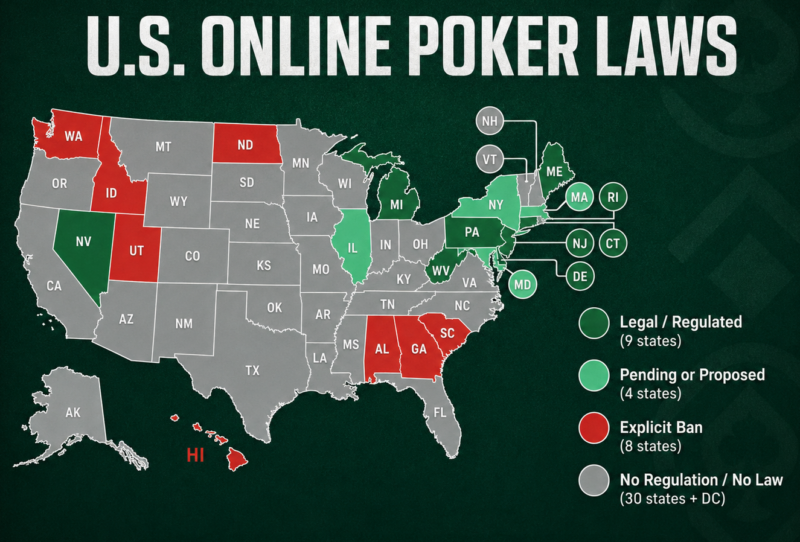
The fragmented system of legal, regulated gambling in the US creates a unique challenge in the spaces where technology and regulation combine. Despite becoming a $16 billion yearly business since the repeal of the Professional and Amateur Sports Protection Act (PASPA) in 2018, there is no federal framework for the way gambling should be run.
This situation shapes the technology that operators choose or are mandated to employ, including AI identity verification, geolocation tech and responsible gambling tools. While this can be a complicated endeavour, the billions of dollars at stake have created a thriving niche of technological suppliers whose main clients are the big US gambling giants. This is how tech and regulation have combined to shape the American gambling market as it is today.
Michigan’s Casino Regulation is a Competitive Example
Every online gambling business in the US has to have a series of tech stacks for different compliance purposes. If they don’t have them – they’ll be denied a license. That is on top of all the other complexities of running an online casino.
Michigan is a great example of some of these challenges. It only opened up a regulated online gambling market in 2021, but across 2025 operators made $3.8 billion in revenues and paid more than $600 million in taxes and revenue sharing.
When there’s this much money on the line, regulators pay close attention – and Michigan’s Gaming Control Board (MGCB) hasn’t been shy of enforcing new rules on operators and players. This state of affairs can become confusing for players, so they often look to third party resources to keep track of what’s changing between operators.
For example, recent regulatory changes and updates to casinos offerings are covered extensively by Casino.org in Michigan, as well as other local markets. Players use these sites to get updated information on casino features and licensing information, to help them make an informed choice.
One interesting piece of recent regulatory change was when the MGCB approved the state to join the Multi-State Internet Gaming Agreement (MSIGA). This is a drive to allow players across fragmented US markets to play online poker with each other, instead of being fragmented – which is bad for the health of the poker business overall.
Michigan became the latest state to join the agreement, and poker fans in the state can now play online with gamblers from Pennsylvania, Delaware and West Virginia among others.
Even this seemingly simple regulation would have technical and compliance challenges such as opening shared liquidity pools, ensuring that all sites meet the regulations of all states and sophisticated login and player identity verification that geolocate players in those states.
New Jersey Shows What a Mature Market Looks Like
Few states have as much experience with online gambling as New Jersey. It has long had legal casino gambling in Atlantic City, and it was the key state in the lawsuit that eventually brought down PASPA and opened up the US for regulated sports betting markets in individual states.
It also jumped on launching online casinos relatively early, and is now the biggest market in the country in that regard.
Rather than focusing on light-touch regulation that sets standards during a growth period, New Jersey’s regulators have a long-term goal of a sustainable market.
Recent regulatory moves have focused on rolling out responsible gambling technologies, including joining a multi-state self exclusion program.
How Regulation Drives Tech Choices for New York Sportsbooks
Another interesting example of how regulation shapes technology use in the US gambling sector is in New York. The US’ biggest sports betting market also has its highest tax rate on the business at 51%.
Because it is such a big market, operators are willing to put up with high taxes. However, margins are lower so operators have somewhat shifted their focus in a way they haven’t in other states.
For example, high customer acquisition costs become less acceptable in this case. This leads to more of a focus on customer retention analytics, personalized algorithmic marketing over broad sweeps or careful cost-benefit and lifetime value analysis of promotions.
This shows how regulatory decisions can not only shape the technology that is deployed by gambling firms but also the way they use that tech.
Where Things Go From Here – The New Frontier
The next big change for the US gambling business will be driven by the transformative power of AI. Operators are increasingly deploying AI to work out custom offers based on players’ betting activities, and to smooth the onboarding process. They’re also used for compliance and responsible gambling monitoring across networks, helping platforms analyse large-scale transaction data in real time.
As the technology matures, both industry participants and regulators are adapting to new capabilities on all sides. While AI can enhance efficiency and detection systems, it also raises the overall importance of strong safeguards and clear regulatory standards. Over the coming years, AI is likely to be a central force in shaping how operators, regulators, and technology providers work together to maintain fair and secure gambling environments.