Skip to content
Programgeeks

Programgeeks

The Art of Social Hosting in a Tech-Savvy Era

Primary Menu
  • Home
  • Hosting
  • Social Media News
  • Crypto
  • Software
  • About Us
  • Contact Us
  • Home
  • Latest
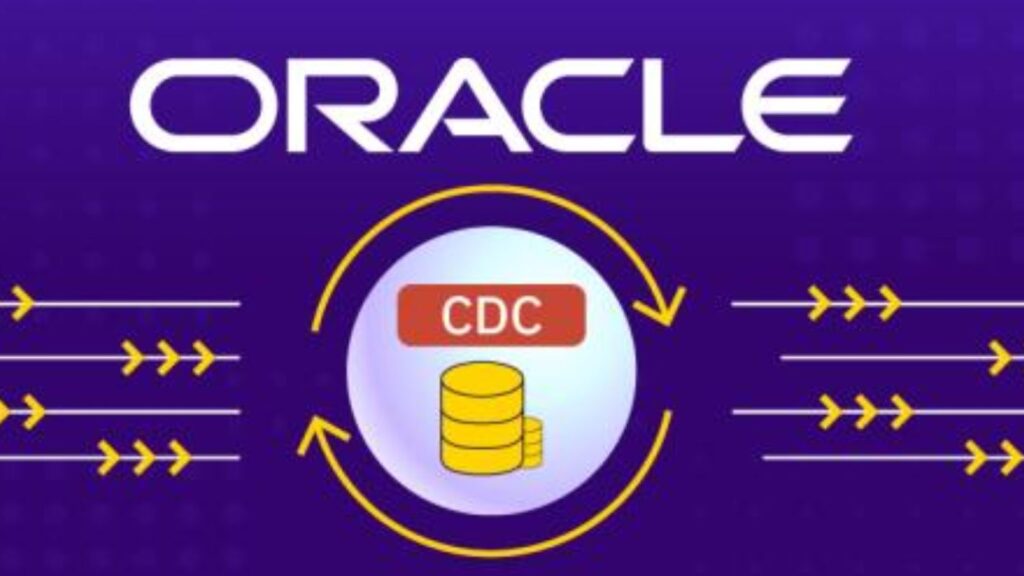
  • All That You Need To Know About Oracle Change Data Capture (CDC)

All That You Need To Know About Oracle Change Data Capture (CDC)

Doreen Achen July 3, 2025 4 min read
1277

Table of Contents

Toggle
  • Introduction
  • What is Change Data Capture
  • The Development of the Oracle Change Data Capture Technology
  • The Technology Driving Oracle Change Data Capture
  • How Do Businesses Benefit From Oracle Change Data Capture 
  • Forms Of Oracle Change Data Capture

Introduction

This post will take you through the various facets of Oracle CDC (Change Data Capture). It will start with the concept of the Change Data Capture technology and go on to the evolution of Oracle CDC, the functions of this feature, and the types of this technology. 

Oracle has been the mainstay of Database Management Systems since the time it was commercially launched more than five decades back. The Oracle CDC technology has been received very well by organizations around the world, mainly due to its ability to reduce operating costs, increase database operating efficiencies, and simplify the extraction of data from the Oracle database.  

What is Change Data Capture

Before going into Oracle CDC, it is necessary to understand the general concept of Change Data Capture. CDC extracts and loads incremental data (data generated after the last round of data transfer from a source to a target database) into a data storage repository or a data warehouse in real-time. It is a very effective solution that reduces data warehousing costs. 

The benefit of CDC is that only the changes added to a database are considered. It is a time-saving process as it does away with the need to refresh the complete database whenever any changes are made to it.  

The Development of the Oracle Change Data Capture Technology

Oracle Corporation launched the Oracle CDC feature out of the box with its 9i version. The process worked as follows. 

Change Data Capture tracked and recorded all changes made to user tables in a database to be stored in specific change tables to be used in ETL (Extract, Transfer, and Load) applications. Whenever required, these changes can be identified, processed, and transferred to a data warehouse or a designated target database.

However, though Oracle had made a start in the Change Data Capture niche, CDC was still in its nascent years and not very refined. The trigger-based feature was found to be too invasive by DBAs and could not be optimally used by them. Oracle was quick to act on this feedback of their new Change Data Capture technology and a new and refined version of Oracle CDC was introduced with their 10g version. 

This new model of CDC was seamless and non-intrusive too. It leveraged the redo logs of the source database along with the replication tool built into Oracle. This revised version was a huge improvement over the previous one. It had the ability to identify and transfer changes made to data from the source to the target databases without affecting the quality, speed, or performance of the source database. 

This Oracle CDC technology had a positive impact on Oracle users and was very well received. However, despite its success, Oracle decided to discontinue this feature out of the box from its 12c version. Users could either use other Oracle tools to access the Change Data Capture feature or pay for Oracle Golden Gate which had Oracle CDC built into it. 

The Technology Driving Oracle Change Data Capture

The Oracle CDC technology functions in the following way.

Changes made in the source databases are replicated in the target database. Some action must be taken next based on these changes. The performance of the CDC is optimized regardless of whether the two databases – the source and the target – are the same or different. The Oracle Data Integrator is used by Oracle CDC to track the changes made to the data at source and used by other applications. 

The Data Integrator supports two modes of Oracle CDC. 

The first is the Simple Journalizing Mode where all changes made to individual data in a database are monitored. The second is the Consistent Set Journalizing Mode where all changes made to a set of data stores are monitored. However, before doing so, it must be ensured that there is referential integrity between the data stores. 

Oracle Change Data Capture can be easily set up and installed by DBAs in the Oracle Data Integrator.   
How Do Businesses Benefit From Oracle Change Data Capture 

There are several benefits that accrue to businesses when they use Oracle CDC. 

# As software with design patterns, CDC records all changes made to data in a database. These changes are used by businesses to analyze, integrate, and deliver data. This greatly increases the speed of warehousing activities. 

# Databases are replicated by the CDC technology without having any impact on their performance. Business continuity is maintained when migrating databases to the cloud as there is no need to shut them down during the process.

# Oracle CDC can be initiated from any storage repository or database as it can preserve and capture the state of the data. Once the CDC identifies all changes to the source database, it seamlessly and quickly extracts and mirrors all changes made in the source database to the target database. 

Forms Of Oracle Change Data Capture

There are two types of Oracle CDC.

# Synchronous Mode where triggers are placed in the source databases. Whenever changes take place, they are automatically set off. SQL statements record the changes through a DML (Data Manipulation Language) function and classify them as Update, Delete, or Insert as the case may be.  

# Asynchronous Mode that functions through redo logs. They move data and changes after a DML activity is carried out with a SQL statement. Transactions are not affected by changed data as it does not belong to the transactions that changed the tables in the source database. 

Asynchronous Mode is available in three forms namely HotLog, Distributed HotLog, and AutoLog. Once Asynchronous CDC is configured, there is a negligible effect of the changes made on the source database.  

Costs for database maintenance are significantly lowered by Oracle Change Data Capture.   


Continue Reading

Previous: Website Uncertainty and UFABET Clarity: A Guide for Online Users
Next: Streamline Data Tracking with Flexible API Data Integration for Better Operational Efficiency

Trending Now

4 Ways to Attract New Subscribers to Your OF 1

4 Ways to Attract New Subscribers to Your OF

April 21, 2026
Why Some Online Casinos Have Better NZ Language Support Than Others 2

Why Some Online Casinos Have Better NZ Language Support Than Others

April 20, 2026
QQWIN4D – Step Into the Winning Zone 3

QQWIN4D – Step Into the Winning Zone

April 18, 2026
Open the Door to Big Wins with KEY4D 4

Open the Door to Big Wins with KEY4D

April 18, 2026
The Role of Digital Tools in Modern Home Remodeling Projects 5

The Role of Digital Tools in Modern Home Remodeling Projects

April 17, 2026
Market Trends and Their Role in Property Tax Changes 6

Market Trends and Their Role in Property Tax Changes

April 16, 2026

Related Stories

The Role of Digital Tools in Modern Home Remodeling Projects
3 min read

The Role of Digital Tools in Modern Home Remodeling Projects

April 17, 2026 40
Market Trends and Their Role in Property Tax Changes
3 min read

Market Trends and Their Role in Property Tax Changes

April 16, 2026 26
Where to Sell Cisco Gear
12 min read

Where to Sell Cisco Gear

April 15, 2026 32
The AI Revolution in Modern Game Engines: Redefining Interactive Environments
2 min read

The AI Revolution in Modern Game Engines: Redefining Interactive Environments

April 12, 2026 46
Types of drivers in headphones and speakers
3 min read

Types of drivers in headphones and speakers

April 9, 2026 60
What Do “Power Amp,” “Preamp,” “Signal Chain,” and “Gain” Mean
3 min read

What Do “Power Amp,” “Preamp,” “Signal Chain,” and “Gain” Mean

April 9, 2026 56

more you may love

Looking for Safe, No-Drama Hookups in 2026? Start Here 1

Looking for Safe, No-Drama Hookups in 2026? Start Here

February 26, 2026
A Look Into the Wild Wild Riches Returns Slot 2

A Look Into the Wild Wild Riches Returns Slot

February 26, 2026
Canadian Casino Play Styles: Casual Sessions, Focus Play, and Social Gaming 3

Canadian Casino Play Styles: Casual Sessions, Focus Play, and Social Gaming

February 25, 2026
How REST APIs Power Comparison and Aggregation Websites 4

How REST APIs Power Comparison and Aggregation Websites

February 25, 2026
How AI Agents Differ from Traditional Chatbots in Real Business Scenarios 5

How AI Agents Differ from Traditional Chatbots in Real Business Scenarios

February 25, 2026
1864 Zynlorind Lane
Vyxaril, NJ 59273
  • Home
  • Privacy Policy
  • Terms and Conditions
  • About Us
  • Contact Us
© 2026 programgeeks.net
We use cookies on our website to give you the most relevant experience by remembering your preferences and repeat visits. By clicking “Accept”, you consent to the use of ALL the cookies.
Do not sell my personal information.
Cookie SettingsAccept
Manage consent

Privacy Overview

This website uses cookies to improve your experience while you navigate through the website. Out of these, the cookies that are categorized as necessary are stored on your browser as they are essential for the working of basic functionalities of the website. We also use third-party cookies that help us analyze and understand how you use this website. These cookies will be stored in your browser only with your consent. You also have the option to opt-out of these cookies. But opting out of some of these cookies may affect your browsing experience.
Necessary
Always Enabled
Necessary cookies are absolutely essential for the website to function properly. These cookies ensure basic functionalities and security features of the website, anonymously.
CookieDurationDescription
cookielawinfo-checkbox-analytics11 monthsThis cookie is set by GDPR Cookie Consent plugin. The cookie is used to store the user consent for the cookies in the category "Analytics".
cookielawinfo-checkbox-functional11 monthsThe cookie is set by GDPR cookie consent to record the user consent for the cookies in the category "Functional".
cookielawinfo-checkbox-necessary11 monthsThis cookie is set by GDPR Cookie Consent plugin. The cookies is used to store the user consent for the cookies in the category "Necessary".
cookielawinfo-checkbox-others11 monthsThis cookie is set by GDPR Cookie Consent plugin. The cookie is used to store the user consent for the cookies in the category "Other.
cookielawinfo-checkbox-performance11 monthsThis cookie is set by GDPR Cookie Consent plugin. The cookie is used to store the user consent for the cookies in the category "Performance".
viewed_cookie_policy11 monthsThe cookie is set by the GDPR Cookie Consent plugin and is used to store whether or not user has consented to the use of cookies. It does not store any personal data.
Functional
Functional cookies help to perform certain functionalities like sharing the content of the website on social media platforms, collect feedbacks, and other third-party features.
Performance
Performance cookies are used to understand and analyze the key performance indexes of the website which helps in delivering a better user experience for the visitors.
Analytics
Analytical cookies are used to understand how visitors interact with the website. These cookies help provide information on metrics the number of visitors, bounce rate, traffic source, etc.
Advertisement
Advertisement cookies are used to provide visitors with relevant ads and marketing campaigns. These cookies track visitors across websites and collect information to provide customized ads.
Others
Other uncategorized cookies are those that are being analyzed and have not been classified into a category as yet.
SAVE & ACCEPT