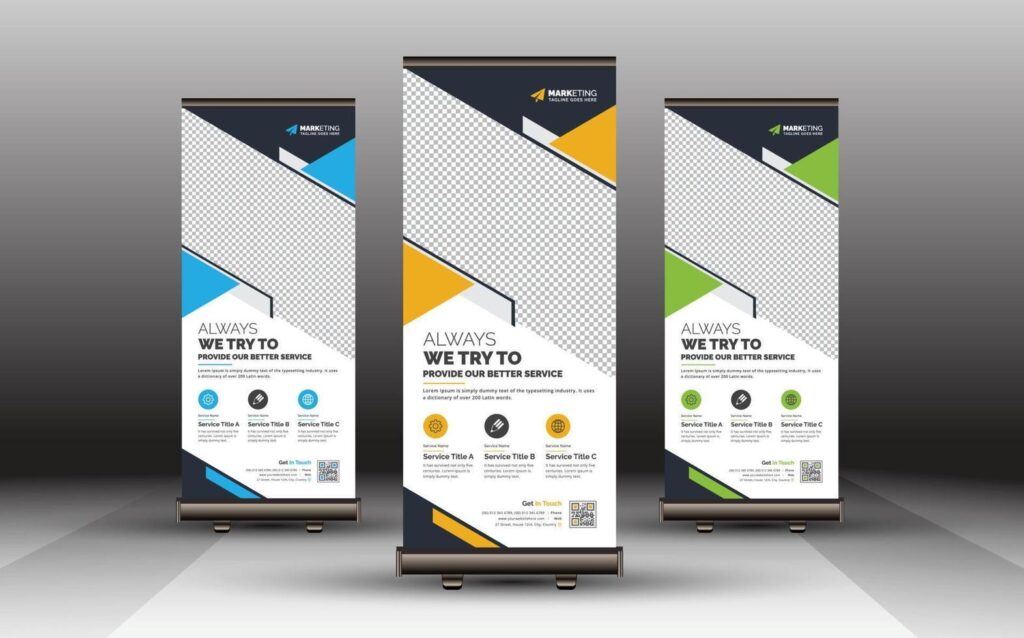
A banner stand seems like a simple purchase—until you’ve watched one lean, curl, or crumble halfway through a busy event day. In practice, these portable displays do a lot of heavy lifting: they introduce your brand in a split second, anchor your space visually, and help people understand what you do without a conversation. When you’re competing with noise, crowds, and distractions, a professional banner stand isn’t “nice to have”; it’s often the difference between being noticed and being walked past.
So what should you actually look for? Not just in terms of price, but in build quality, usability, and the real-world conditions your team will face.
Start with the job the banner needs to do
Before comparing hardware types or print finishes, clarify the environment and the goal. A banner stand for a conference booth has different requirements than one for a retail entrance or a pop-up clinic.
Consider context: footfall, distance, and dwell time
Ask yourself three practical questions:
- How far away will people first see it? If it’s across an aisle, bold messaging wins. If it’s next to a counter, detail matters.
- How long will people stand near it? Quick-glance messaging works for passers-by; story-driven layouts suit waiting areas.
- What’s the lighting like? Glossy finishes can glare under spotlights; matte may read better indoors.
This step prevents the common mistake of buying a stand that’s technically “fine,” but mismatched to the setting.
Hardware matters more than most teams expect
Print gets the attention, but hardware determines whether the banner stays looking sharp for the full run of a campaign.
Stability and footprint
If your banner will live in a doorway, on a shop floor, or anywhere people brush past it, stability is non-negotiable. A slightly wider base or a lower center of gravity can stop a banner from toppling when someone catches it with a tote bag.
Look for details like:
- rigid base construction (not thin, easily dented casings)
- anti-slip feet for smooth indoor floors
- tensioning systems that keep the graphic from sagging
Set-up speed and “user-proofing”
The best banner stand is the one your team can assemble correctly, every time, without hunting for instructions. If you’ve ever seen a banner assembled with the graphic upside down or the pole mis-seated, you’ll know why this matters.
Pay attention to:
- intuitive pole systems (fewer pieces, clearer locking)
- whether it packs into a protective carry case
- how easy it is to swap graphics without tools
A stand that takes 90 seconds to set up (and doesn’t require two people) saves real labour over repeated use.
Treat print as a communication tool, not decoration
Design and print quality don’t just affect aesthetics—they affect comprehension. In busy environments, clarity is performance.
Material choice and curl resistance
Banner material should hang flat and stay flat. Some low-cost materials develop edge curl over time, especially with repeated rolling and unrolling. Ask about thickness (micron or gsm), and whether the material is designed for frequent retraction.
If you’re unsure what’s common in your sector, it helps to browse examples of how different formats are used in practice—especially when comparing options for marketing stands for retail and events, where durability and quick-change practicality tend to matter more than a once-and-done campaign.
Colour accuracy and readability
Brands often obsess over exact colour matching, but legibility is the real KPI. High contrast, strong hierarchy, and a single clear call-to-action will outperform a beautiful but busy layout.
A good rule of thumb:
- one primary message people can read in 3–5 seconds
- one supporting line for those who step closer
- one action (QR code, URL, “Ask for a demo,” “Book a fitting,” etc.)
If you include a QR code, test it on multiple phones and from different angles. Codes that look fine on-screen can fail when printed too small or placed over textured backgrounds.
Choose the right format for your use case
“Banner stand” is a category, not a single product. Different mechanisms suit different demands.
Retractable (roller) banners: best for repeatable portability
Roller banners are popular for a reason: they’re compact, fast to deploy, and tidy to transport. The trade-off is that very cheap units can suffer from misalignment (the graphic retracts slightly off-centre) or weak tension.
Ideal for:
- regular events and conferences
- reception areas and lobbies
- temporary promotions that change monthly or seasonally
Tension or fabric systems: best for premium presentation
Tensioned graphics (often fabric) can look more “built” and less temporary. They’re also less prone to the curled-edge issue common with some vinyls. The downside is that they can be bulkier, and not all are as quick to set up as a roller.
Ideal for:
- premium retail zones
- high-visibility brand moments (product launches, VIP spaces)
- photography-friendly backdrops
Outdoor-ready displays: best when wind is a factor
If there’s any chance your banner will be used outside—even occasionally—don’t gamble with indoor hardware. Outdoor stands need weight, airflow considerations, and materials that handle moisture.
Ideal for:
- forecourt promotions
- outdoor markets
- event entrances
Don’t ignore logistics: storage, transport, and reusability
Most banner stands fail early because they’re treated as disposable. If your team plans to reuse the stand, design for the lifecycle.
Graphics that can be replaced
A stand that allows graphic replacement extends its value dramatically. Instead of buying new hardware for each campaign, you refresh the print and keep the frame. This matters for:
- franchises with seasonal offers
- exhibitors with rotating product messages
- retailers testing different promotions
Real-world durability checklist
Here’s a quick way to sanity-check quality before you commit (and it’s worth doing, even if you’re buying just one):
- Does the base feel rigid and weighted enough for your location?
- Does the mechanism retract smoothly without snagging?
- Are spare parts (poles, end caps) available if something goes missing?
- Is the carry case protective or purely cosmetic?
- Will the print stay flat after multiple uses?
That last point—how it looks on day five, not day one—is where “professional” really shows.
A final thought: professional banners reduce friction
A well-chosen banner stand is less about looking flashy and more about removing friction. It helps the right people find you, understand you, and take the next step—without needing a staff member to intervene.
If you invest in stable hardware, sensible materials, and clear messaging, you’ll end up with a display that works hard in the background. And in retail and events, that quiet reliability is often what turns a one-off impression into a real conversation.