Every risky choice is a bet on a future you cannot see, and a free demo is the cheapest place to drill the habits that separate skill from luck.
A crash game demo teaches one thing every trader, lender, and founder needs: how to make a clean decision when the result is still unknown. That is the heart of risk. You act now. The payoff shows up later. The gap between the two is where good judgment either pays off or falls apart. Markets work this way. So do loans, bets, and product launches. You never get full information, and waiting for all of it is its own mistake. A crash game strips the problem to the bone. A number climbs, the end is hidden, and you have to choose. It is a tiny, fast, honest model of a much larger problem.
Every risk decision is a bet on an unknown future
Strip any risky choice down and it is a bet on an unknown future. A trader buys and hopes the chart agrees. A bank lends and hopes the borrower pays. A founder ships and hopes the market shows up. None of them know for sure. They weigh the odds, place the bet, and live with the result. A chicken road demo puts that exact feeling in your hands for free, with no money on the line. A multiplier climbs. It will crash at some hidden point. Your only move is to bank it or push for more. The stakes are play money, but the choice is real, and the nerves feel real too.
Process over outcome: judge the decision, not the result
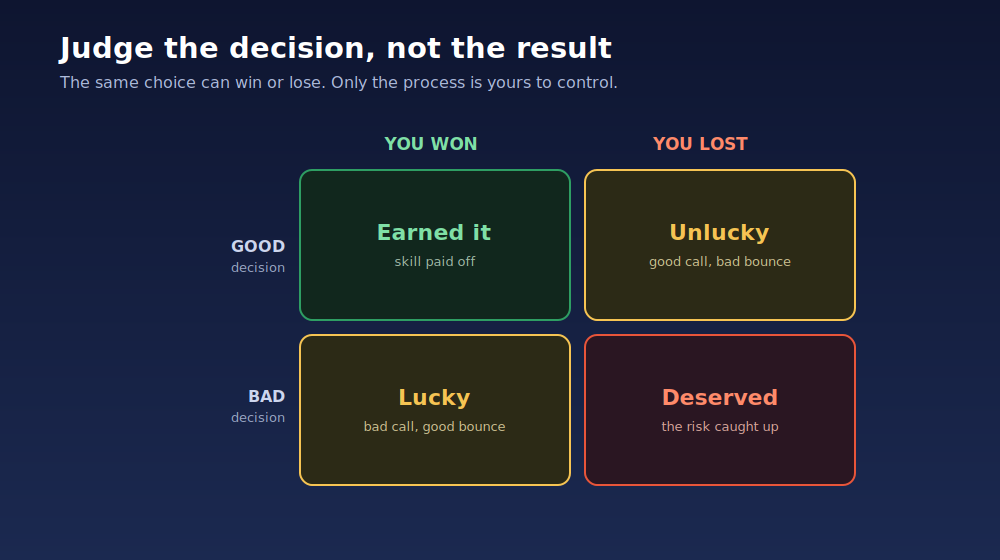
Judge the decision, not the result, because a good call can still lose. This is the trap that fools most people. A reckless bet that happens to win feels smart. A careful bet that happens to lose feels dumb. Both feelings are wrong. One round tells you almost nothing, because luck swamps skill over a short stretch. Grading yourself by the scoreboard instead of the choice has a name: outcome bias. A demo helps here in a way real money cannot. You can play a hundred fast rounds and watch the same rule win some and lose some. Over enough tries, the process shows through, and the noise of any single result fades out.
Pre-commit your risk rules before the pressure hits
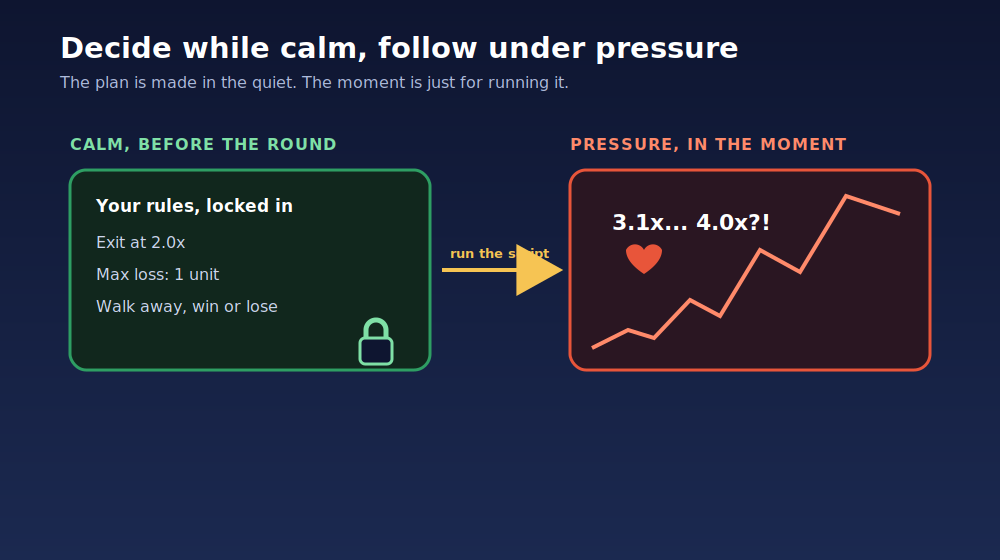
Set your risk rules before the pressure hits, while your head is still cool. In the moment, your brain is a bad teammate. The number is climbing, the heart is pounding, and that is the worst time to decide anything. So decide earlier. Pick the exit before you start. Pick the most you will risk. Pick the point where you walk away, win or lose. Write it down if that helps. Then the job in the heat of the moment is simple: follow the plan you already made. A demo is the perfect rehearsal room, because you can practice hitting the button on time until it stops feeling like a fight.
A simple routine turns a demo run into real practice:
- Set your exit and your max loss before the first round.
- Risk only the stake you would risk with real money.
- Play many rounds, not one, so luck has time to even out.
- Stick to the plan even when a bigger number is taunting you.
- Note what you did after each round, then read it back later.
Position sizing and asymmetry
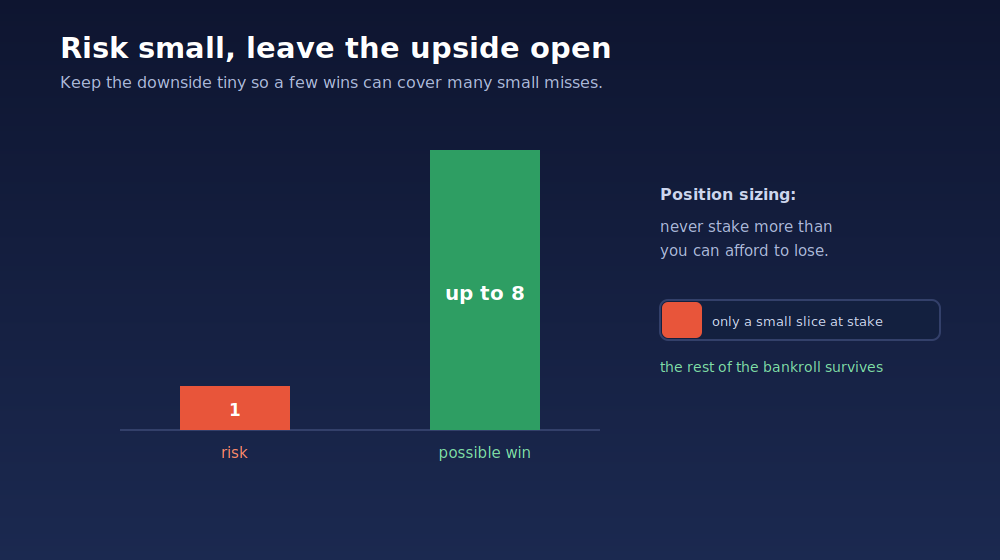
Position sizing is the rule that keeps you in the game: never risk more than you can afford to lose. Size is the quiet skill behind every risk job. Bet too big and one bad run wipes you out, no matter how sharp your reads are. Bet small and you survive long enough for skill to matter. Asymmetry is the other half. The best spots risk a little to maybe win a lot, so a few hits cover many small misses. Expected value, or EV, just blends the two: the size of each outcome times its odds. You do not need the math live. You need the habit of asking whether the payoff is worth the risk before you commit.
Why a crash game demo beats learning with real money
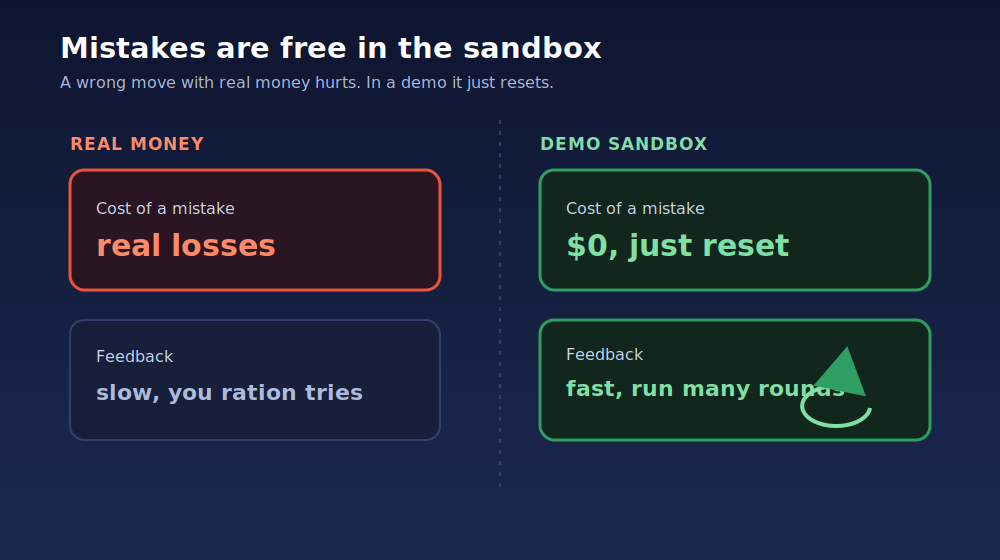
A crash game demo beats real money for learning because it removes the one thing that ruins practice: the fear of going broke. Mistakes are free in a sandbox. That changes everything. You can test a bold exit, blow it, and try again a second later. The feedback loop is fast and cheap. Fintech already runs on this idea. Traders use paper accounts. Developers ship to a testnet before mainnet. Banks model loans before a cent moves. The demo version of a crash game like Chicken Road is the same tool in a smaller box. You build the reflexes and the discipline first, where a wrong move costs nothing but a little pride.
Real money and a demo, side by side:
|
What changes |
Real money |
A demo sandbox |
|
Cost of a mistake |
Real losses, sometimes painful |
Nothing but a quick reset |
|
Feedback speed |
Slow, you ration your tries |
Fast, you can run many rounds |
|
Emotional load |
High, fear clouds the call |
Low, you think more clearly |
|
What you can train |
Mostly nerve control |
The full decision routine |
Carrying the lessons into real decisions
Carry the lessons into real decisions by keeping the process and dropping the bets. The habits travel. The stakes do not. A calm exit plan works the same whether the number on screen is a multiplier, a stock, or a loan book. Process beats outcome in every one of them. Size your risk, respect asymmetry, and decide before the pressure lands. One honest line belongs here too. A real crash game carries a house edge, and markets carry real risk, so neither is a money printer. A free game like Chicken Road teaches judgment, not a winning system. Take the discipline, leave the wager, and a free game has sharpened a skill that pays off far from the table.
The habits worth keeping are short:
-
Grade the decision you made, not the result luck handed you.
-
Size every bet so one bad run cannot take you out.
-
Lock your exit and your loss limit before the pressure starts.
-
Treat any demo as a free lab for judgment, not a shortcut to profit.