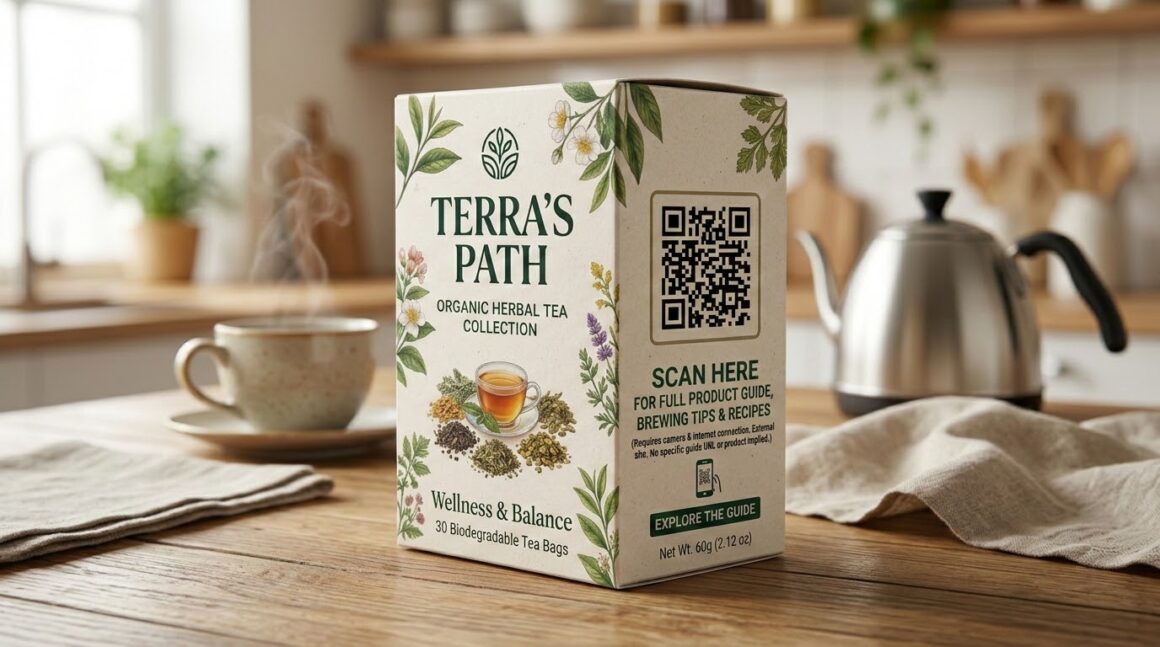
Packaging has always had more jobs than space. It needs to protect the product, explain what it is, look attractive on a shelf, meet legal requirements, and persuade someone to buy. For many products, there is not enough room left for the information customers actually want.
QR codes give packaging a second layer. The box, bottle, label, or insert can stay clean while the code opens product guides, origin stories, recycling instructions, videos, warranty registration, or reorder pages. The physical pack does what print does best. The digital destination carries the detail.
This is why QR codes have moved from novelty to standard packaging consideration across food, cosmetics, electronics, homeware, and direct-to-consumer brands.
The Pack Becomes a Product Guide
Many customer questions happen after purchase. How should this be assembled? Which recipe uses this sauce? Is this skincare product suitable for morning or evening? How do I wash this garment? What should I do if a part is missing?
Brands often try to answer all of that on the package and end up with crowded designs. A QR code lets the pack stay simple while offering deeper help to customers who want it.
For furniture, the code might open an assembly video. For coffee, it might show brew ratios and origin notes. For cosmetics, it might lead to shade-matching advice or usage instructions. For baby products, it might link to safety guidance and registration.
The benefit is practical: fewer frustrated customers, fewer support contacts, and a better first experience with the product.
Sustainability Claims Need Evidence
Consumers have become more skeptical of vague environmental language. “Eco-friendly” and “sustainable” do not carry much weight on their own. Packaging QR codes can connect those claims to evidence.
A code can link to recycling instructions by region, material breakdowns, supplier information, certification documents, or refill options. This is especially useful when the pack itself does not have enough space to explain trade-offs clearly.
The tone matters. A sustainability page should be specific and factual. It should avoid overclaiming and make it easy for customers to understand what to do next. If a component belongs in household recycling, say so. If it needs a specialist drop-off point, explain that clearly.
Authentication and Trust
In categories where counterfeits are a problem, QR codes can support product verification. A customer scans the code and checks whether the item appears genuine, whether it has already been registered, or whether it belongs to the right production batch.
This is not a complete anti-counterfeit system by itself. A copied code can still be copied. But unique codes, controlled landing pages, and suspicious-scan monitoring can make abuse easier to spot and harder to scale.
Premium goods, supplements, electronics, cosmetics, and spare parts are all categories where authentication can add confidence at the point of purchase or resale.
Turning the Unboxing Moment Into a Relationship
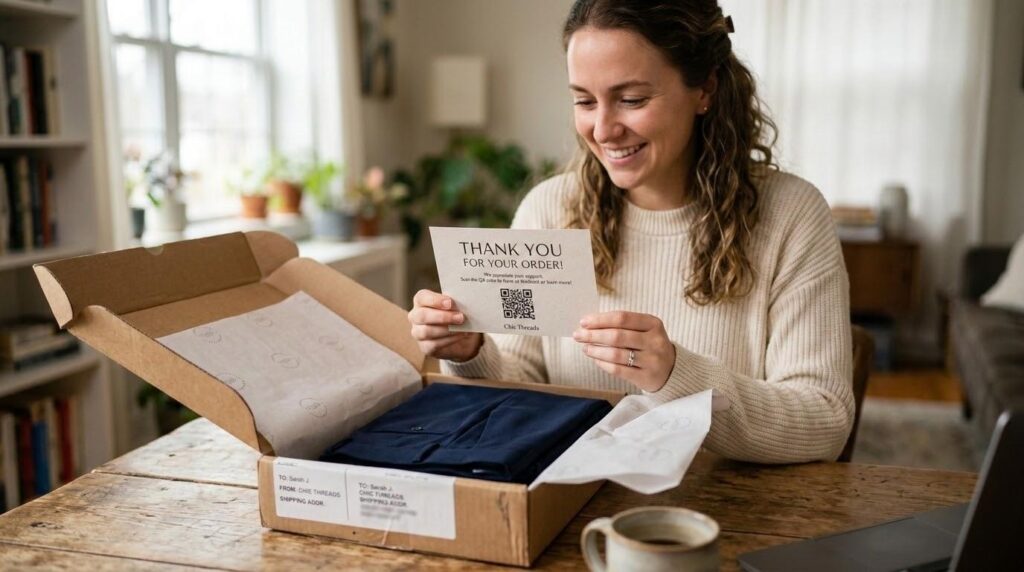
The best time to ask for attention is when the customer is already engaged. Unboxing creates that moment.
A code inside the lid, on a thank-you card, or on a product insert can lead to onboarding content, warranty registration, a founder note, a community invitation, or a first-purchase discount for a complementary item.
This should feel useful, not needy. “Register your warranty in 20 seconds” is stronger than “Join our newsletter.” “Watch the two-minute setup guide” is stronger than “Learn more.” The scan needs to reward the customer’s attention immediately.
Print Quality Matters
Packaging is less forgiving than a flat sheet of paper. Curves, gloss finishes, foil, embossing, small labels, and low contrast can all damage scannability.
Before a production run, brands should test codes at actual size on the actual substrate. Scan with different phones, under store lighting, on curved surfaces, and through any finishing effects. Leave enough quiet space around the code and avoid placing it across folds or seams.
This is where a dependable QR creation workflow matters. Brands can use a QR code generator for packaging destinations, but the final proof still needs real-world print testing before thousands of units go out.
What to Measure
Packaging scans can reveal useful patterns. Which product line gets the most support scans? Do recipe scans lead to repeat orders? Are recycling instructions being used? Does warranty registration improve when the code is moved from the manual to the outer box?
The answers can inform product design, support priorities, and future packaging decisions.
QR codes do not make packaging smarter on their own. They make it possible for packaging to continue the conversation after the shelf. For brands that use them with a clear purpose, that extra layer can improve trust, reduce friction, and bring customers back.