Lark
There are two kinds of managers in high-growth organizations. The first kind manages people: they spend their time in one-on-ones, fielding questions, unblocking issues, relaying information, and making decisions that their team could make if they had the right context. The second kind builds systems: they design the operational infrastructure through which decisions are made, information flows, progress is tracked, and accountability is maintained, and then step back to let the system do the management work. The first kind of manager scales linearly: every new person they manage adds a proportional increment to their workload. The second kind scales geometrically: every improvement to their system benefits every person the system touches without adding to the manager’s personal bandwidth. The organizations that grow fastest with the most operational discipline are disproportionately run by the second kind of manager, and they have built their systems on project management tools that make the operational infrastructure as easy to maintain as it is to build.
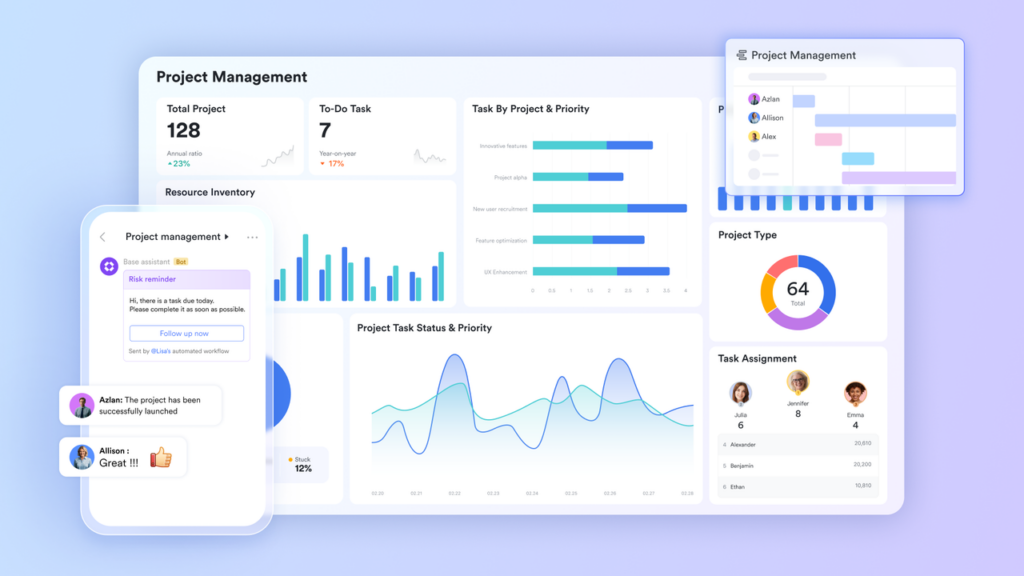
A team dashboard that replaces the daily check-in with Lark Base
The manager who needs to check in with each team member individually to understand the current state of the team’s work is managing people. The manager whose team’s current state is visible in a shared dashboard at any moment is managing a system. The difference is not in the manager’s skill or interest. It is about whether the operational infrastructure has been built to surface information automatically.
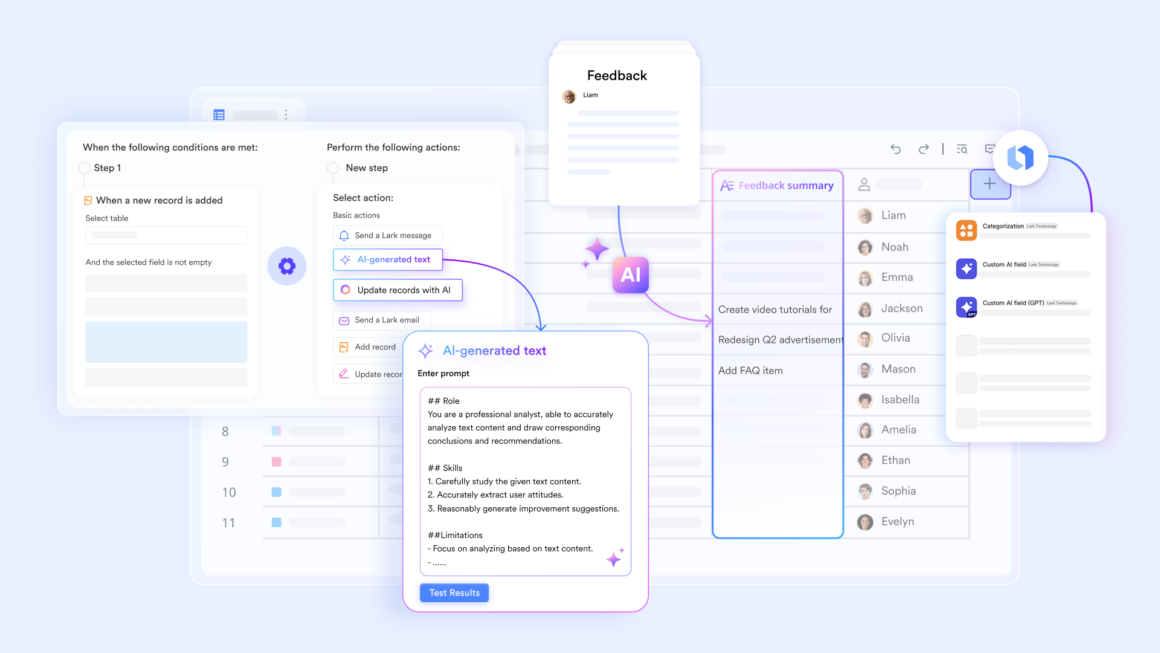
- Shared Kanban and Gantt views give the system-builder manager a live view of every team member’s current work, status, and upcoming deadlines without a single check-in message being required.
- “Personal task views” give each team member a self-managed view of their own priorities, removing the dependency on manager direction for daily task prioritization and creating the autonomous execution that system-building managers are trying to enable.
- Automated notifications tell the manager when a task is blocked, when a deadline is approaching without action, and when a team member’s workload has changed in a way that warrants attention, so the manager receives targeted signals rather than having to scan every team member’s status individually.
Strategy that manages itself with Lark OKR
The manager who has to answer “what should I be working on?” from every team member is managing people. The manager whose team can answer that question themselves by checking the OKR view is managing a system. The difference is not in the quality of the manager’s communication. It is about whether strategic direction has been made visible enough that the team can navigate without constant managerial guidance.
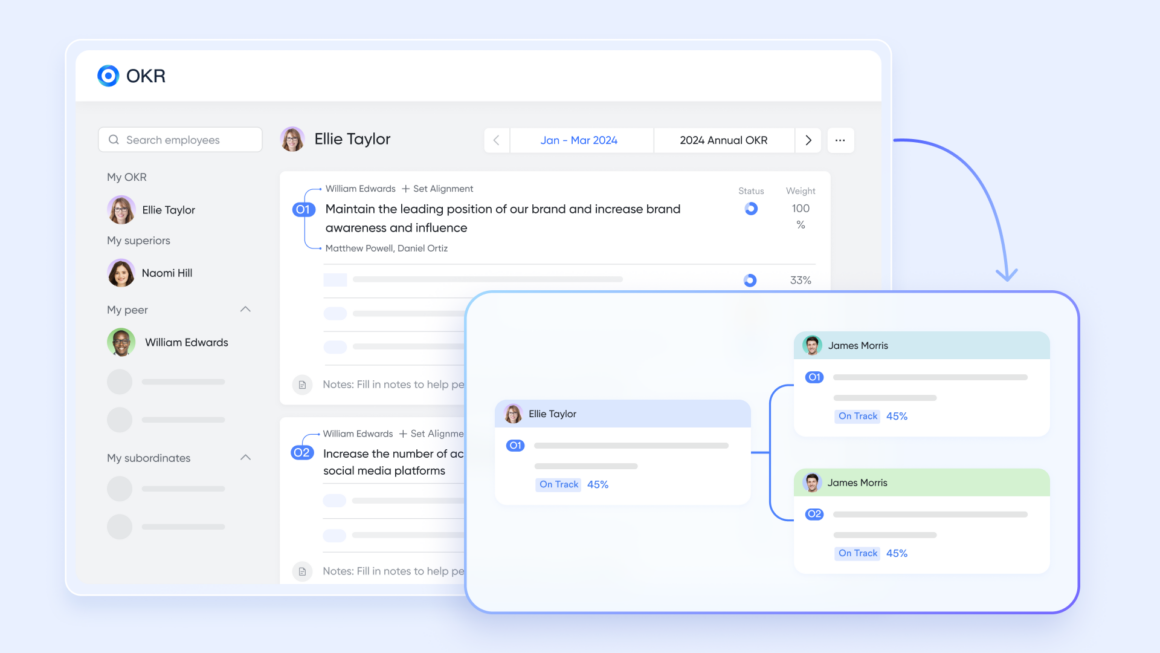
- Company and team objectives visible to every team member replace the manager’s role as strategic relay, giving every person the context to make their own priority decisions without escalating every ambiguous situation.
- Key results are linked to live operational data updates without the manager having to manually report on progress, so the accountability structure maintains itself rather than depending on the manager to enforce it.
- Individual key results set by each team member create a self-managed accountability layer that the manager can review rather than create, reducing the management overhead required to keep the team aligned with organizational priorities.
Documentation that manages the onboarding process with Lark Docs
The manager who spends their first week with every new team member briefing them on processes, introducing them to tools, and explaining the team’s way of working is managing people. The manager whose onboarding documentation does that work for every new team member simultaneously, without their involvement, is managing a system.
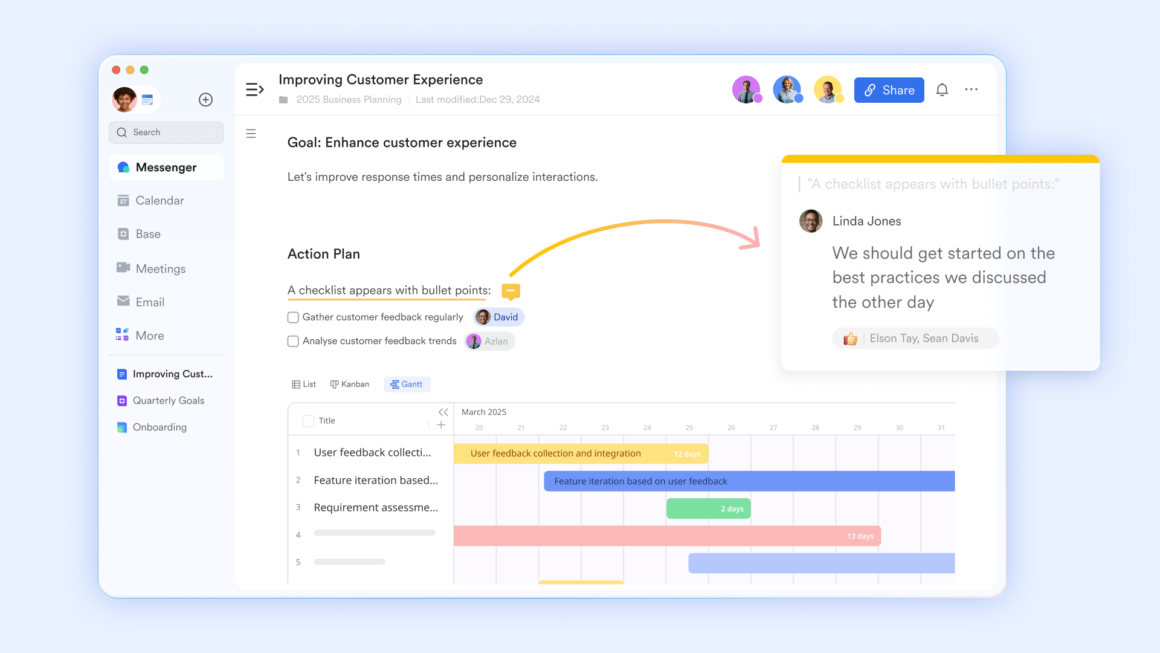
- Document templates for onboarding briefs, process guides, and role-specific getting-started documents ensure that every new team member receives the same complete starting point regardless of when they join and which team member manages their onboarding.
- “@mention” within onboarding documents assigns specific first-week tasks directly to the new team member at the point of documentation, so the action list is embedded in the context rather than delivered separately in a series of messages that require the manager’s time to compose and coordinate.
- “Version History” means the onboarding documentation updates itself as processes change, so the manager does not have to maintain separate documentation and separate communication cycles to keep the onboarding process current.
Approval governance that does not require managerial judgment at every step with Lark Approval
The manager who reviews and approves every team decision personally is managing people. The manager who has configured the approval system to route decisions to the right authority based on defined criteria, and who reviews only the decisions that genuinely require their judgment, is managing a system.
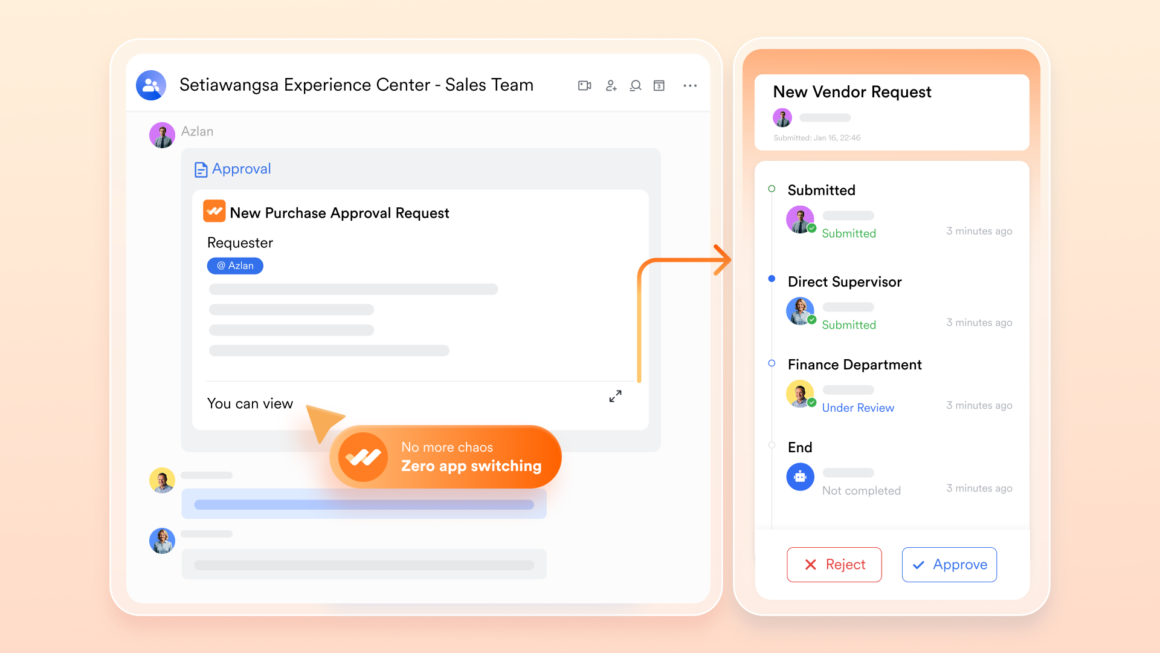
- “Conditional Branches” define the routing logic for every category of decision the team makes, so routine approvals reach the appropriate authority automatically without the manager having to direct each one.
- “Auto-delegation” handles the manager’s absence without requiring the team to wait, ensuring that the approval system continues to function when the manager is unavailable without creating a backlog that they have to clear on return.
- Full approval history gives the manager visibility into every decision that has been made through the system without requiring them to have been personally involved in each one, so their oversight is systemic rather than transactional.
Communication that reaches every team member without the manager in the middle with Lark Messenger
The manager who relays every important update to their team personally is managing people. The manager who has built a communication structure where updates travel directly from their source to every team member who needs them is managing a system.
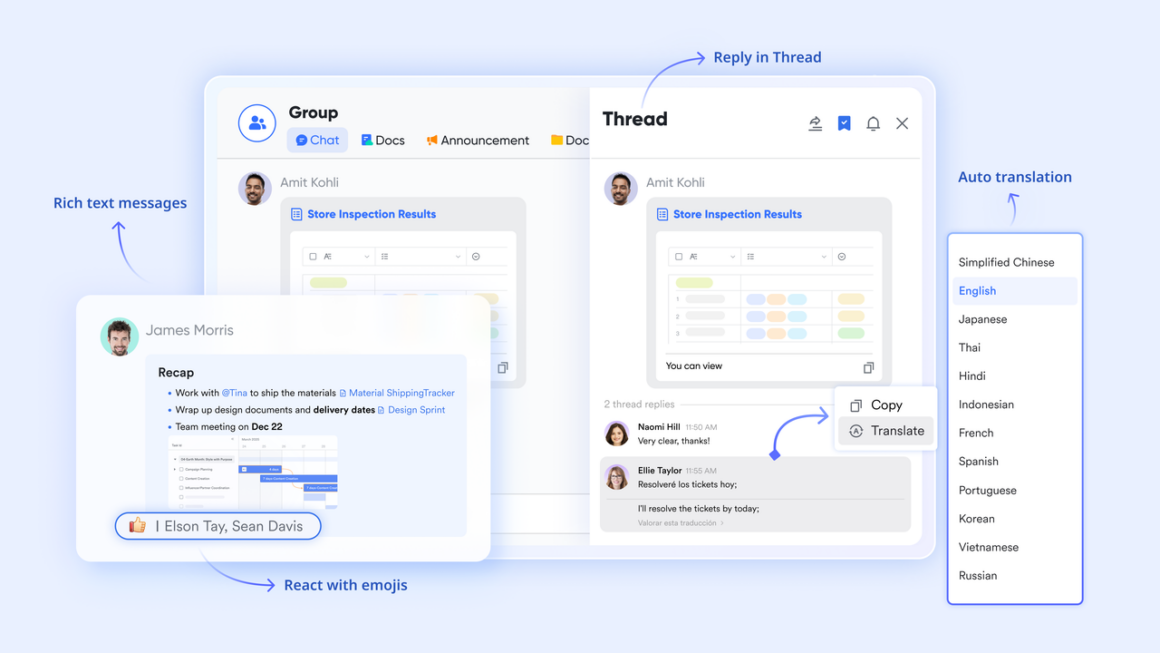
- “Scheduled Messages” allow the manager to compose communications in advance and time them to arrive when they will be most useful, removing the requirement for the manager to be available at the moment every important update needs to be delivered.
- Group folder organization with structured notification rules means that important operational updates reach the team with appropriate urgency without the manager having to decide how to communicate with each one in real time.
- “Read/Unread Status” gives the manager a systemic view of whether communications have landed without requiring individual follow-up, so communication accountability is maintained by the infrastructure rather than by the manager’s personal follow-through.
Bonus: Why most management training produces the wrong kind of manager
Management training programs overwhelmingly focus on interpersonal skills: how to give feedback, how to run one-on-one, how to have difficult conversations. These skills are genuinely valuable and consistently insufficient, because they train managers to be better at managing people rather than better at building systems that manage operational work.
Tools like Asana and monday.com help managers build task tracking systems. Notion and Confluence help them build documentation systems. But neither addresses the communication system, the approval system, or the strategic alignment system, and managers who have only task tracking and documentation tools still end up managing people for everything else. Looking at Google Workspace pricing alongside specialist task and documentation tools reveals a system where the manager has to personally bridge the gaps between the tools they have been given. Lark closes those gaps so the manager can build a complete operational system rather than a collection of disconnected tools.
Conclusion
The manager who builds systems is not less engaged with their team. They are more engaged with the right things: strategy, development, culture, and decisions that genuinely require human judgment. A connected set of productivity tools that handles task visibility, strategic alignment, onboarding documentation, approval governance, and team communication through designed infrastructure rather than managerial effort is what allows a manager to spend their time on the work that only a manager can do.